Companion Care vs. Personal Care: How to Know What Kind of Help Fits at Home
Care at Home / Family Caregiver Guidance
A practical guide for families who are trying to match the right kind of in-home support to a loved one's real daily needs.
A Direct Answer for Families
Companion care is usually the right fit when your loved one mainly needs social connection, routine support, reminders, errands, light help around the home, and someone dependable checking in. Personal care becomes more important when your loved one needs respectful hands-on help with bathing, dressing, hygiene, mobility, transfers, or other daily tasks that affect comfort and safety.
Many families do not know which category they need at first. That is normal. The goal is not to label your loved one. The goal is to notice what is actually getting harder, then choose support that protects dignity and makes daily life feel more manageable.
When Small Changes Start Adding Up
If you are caring for an aging parent, spouse, or loved one in San Antonio, you may not wake up one day with a clear answer. More often, the signs build slowly.
A meal gets skipped. Laundry piles up. A shower keeps being put off. Your loved one says they are fine, but you can tell the routine is taking more effort than it used to. You may start stopping by more often, calling more often, or rearranging your own day to make sure everything is handled.
That is often the point where families begin asking, "Do we just need companionship, or is it time for more hands-on help?"
Promise Senior Solutions works with families who are trying to answer that question without pressure or shame. The right support may be simple companionship. It may be personal care. It may begin with a few hours a week and adjust over time. What matters is creating a care plan that fits the person, the home, and the family's comfort level.
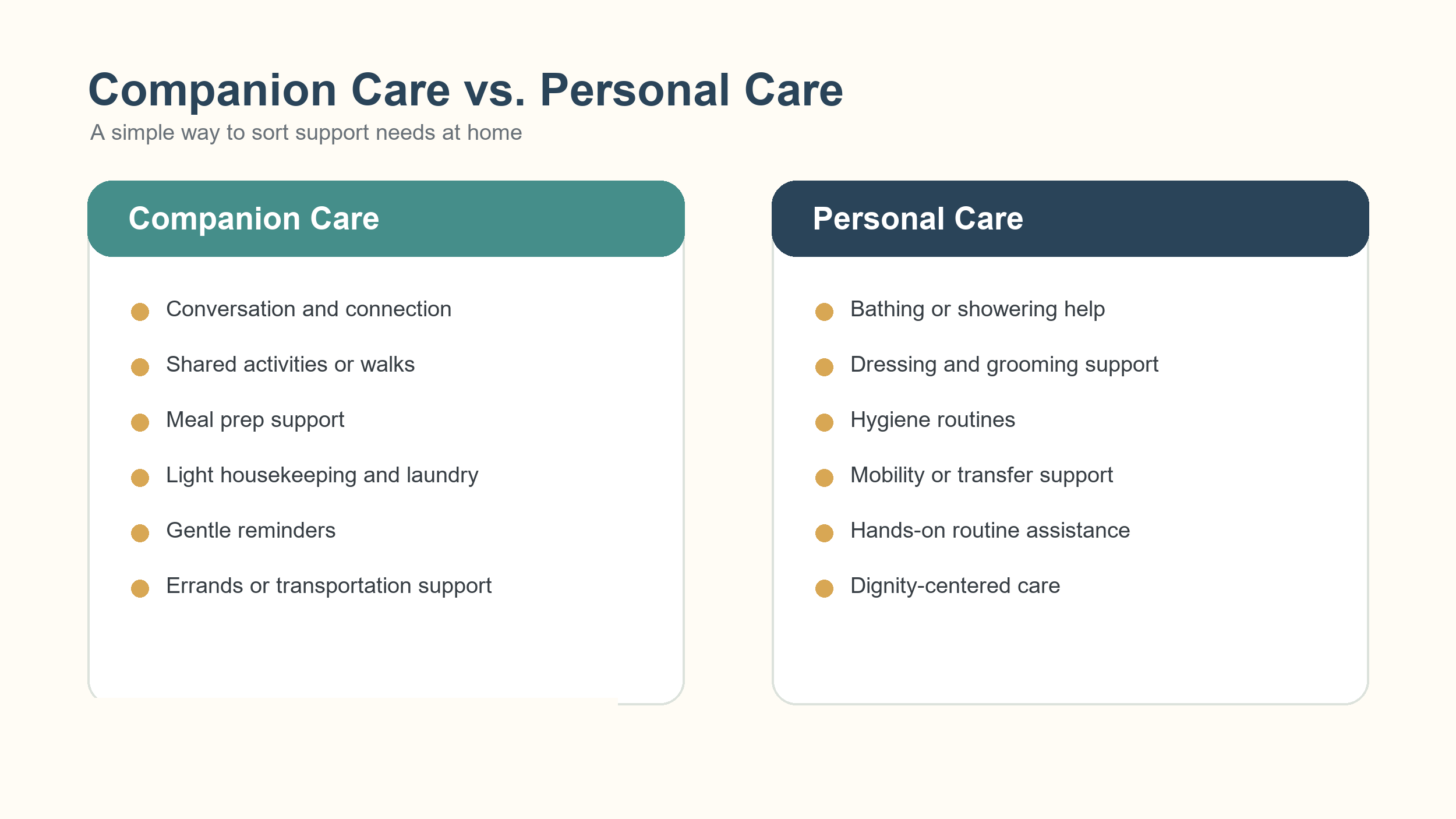
Companion care focuses on presence, engagement, routine, and light daily support. It is often a good first step when a loved one is still managing many personal tasks but is becoming isolated, less active, or less steady with everyday routines.
A companion caregiver may help with things like:
-Conversation and meaningful time together
-Shared activities, hobbies, or short walks when appropriate
-Meal preparation support
-Gentle reminders and routine check-ins
-Light housekeeping, laundry, and tidying
-Errands or transportation support when arranged
-Reassurance for family members who cannot be there every day
The National Institute on Aging describes aging in place as often depending on a mix of services that help with health, personal care, household tasks, transportation, and connection. Companion care fits into that broader picture by helping the day feel less empty and less unsupported.
Personal care is more hands-on. It supports daily tasks that affect hygiene, comfort, movement, and dignity. Families often start thinking about personal care when a loved one is avoiding bathing, wearing the same clothes repeatedly, struggling with transfers, or needing help with bathroom-related routines.
Personal care may include support such as:
-Bathing or showering assistance
-Dressing and grooming support
-Hygiene routines
-Mobility and transfer support when appropriate
-Brief changes or peri care when included in the care plan
-Meal preparation and reminders alongside hands-on support
-Safety-focused help during daily routines
This type of care should be handled with patience and respect. It is not about taking over. It is about helping your loved one complete necessary routines in a way that feels as calm, private, and dignified as possible.
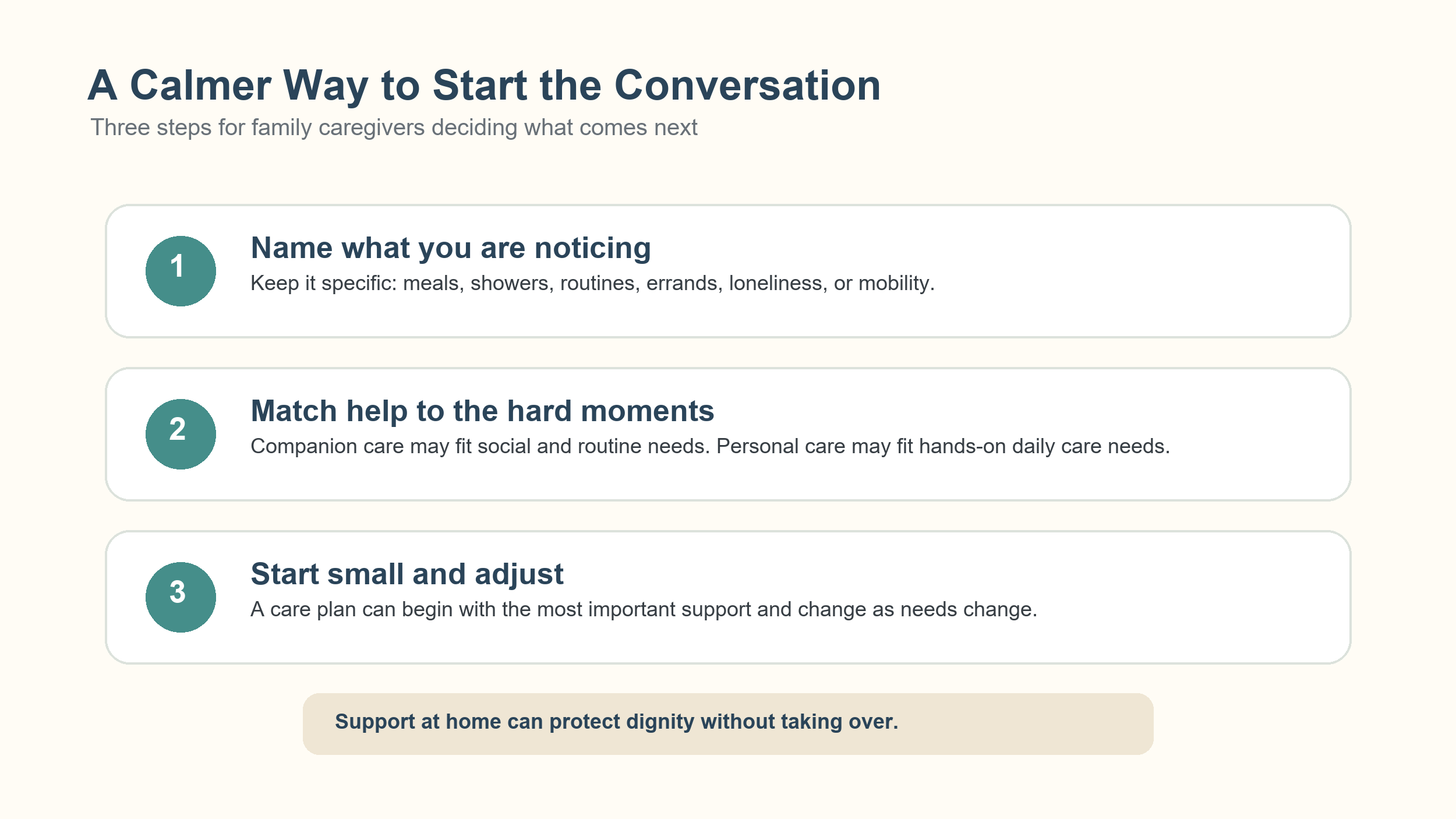
1. Look at What Is Actually Becoming Harder
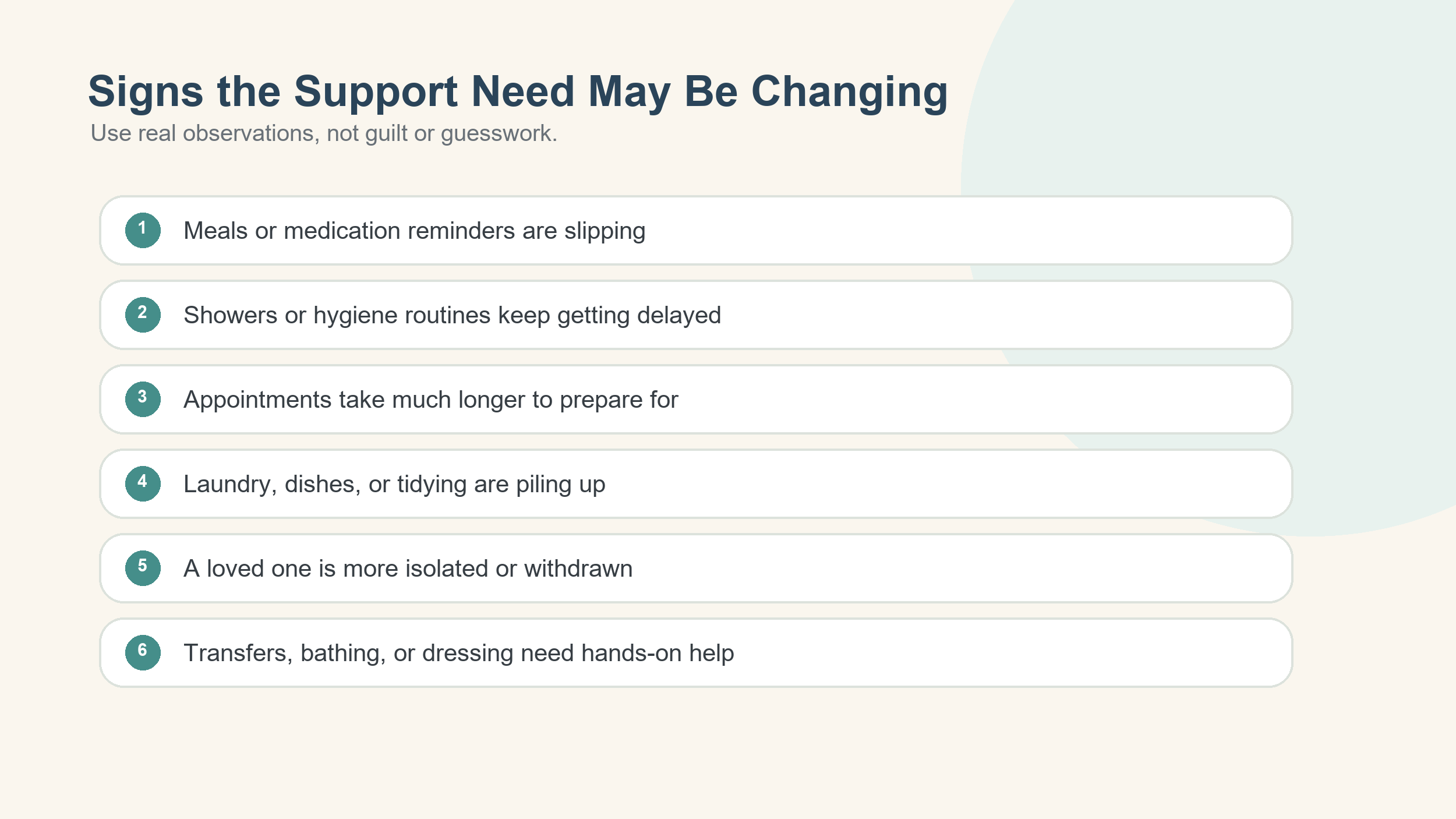
Helpful notes might sound like:
-Mom is eating less when no one visits.
-Dad is skipping showers because he says it takes too much energy.
-My spouse is safe during the day but gets lonely in the evenings.
-Laundry and dishes are getting behind every week.
-Getting ready for appointments now takes much longer than before.
-There have been close calls during transfers or bathroom routines.
If the main concerns are loneliness, meals, reminders, light housekeeping, and structure, companion care may be a strong starting point. If the concerns involve bathing, dressing, hygiene, mobility, or hands-on daily care, personal care may be the better fit. 2. Notice Whether the Need Is Social, Practical, or Hands-On
Families often feel stuck because care needs overlap. A loved one may need conversation and also need help getting ready for the day. They may enjoy companionship but also need bathing support once or twice a week.
2. Think About Dignity First
For many older adults, accepting help feels emotional. They may worry that bringing in care means losing control, privacy, or independence. Family caregivers may also feel guilt, especially if they have been trying to manage everything alone.
3. Consider How Much the Family Is Carrying
Sometimes the clearest sign is not only what your loved one needs. It is what the family is doing to hold everything together.
If one daughter, spouse, or relative is becoming the point person for every meal, every appointment, every shower reminder, and every household task, the care plan may need more structure. The Family Caregiver Alliance notes that caregiving can include a wide range of responsibilities, from household tasks to personal care and emotional support. Naming those responsibilities can help families see the load more clearly.
Bringing in care does not mean the family has failed. It may mean the family is planning wisely before stress turns into crisis.
When to Consider Companion Care
Companion care may be a good fit if your loved one:
-Spends long stretches of time alone
-Needs more structure in the day
-Would benefit from conversation or shared activities
-Needs light help with meals, laundry, or household tasks
-Needs reminders but not much hands-on personal care
-Could use support getting to errands or appointments
When to Consider Personal Care
Personal care may be a better fit if your loved one:
-Is delaying or avoiding bathing
-Needs help dressing or grooming
-Is having trouble with hygiene routines
-Needs support with mobility or transfers
-Is bed bound or has higher hands-on care needs
-Needs respectful assistance with daily routines that have become physically difficult
Common Questions Families Ask
Can companion care and personal care be combined?
Yes. Many families need a mix of support. The care plan should reflect what your loved one actually needs during each visit.
Does needing personal care mean my loved one cannot stay at home?
Not necessarily. Many families use in-home personal care to help a loved one remain safer and more comfortable at home. The right fit depends on the person's needs, the home environment, and what support is appropriate.
What if my loved one refuses help?
Start with the least threatening need. For some families, that may be companionship, meal support, or transportation before hands-on care. A calm conversation and a small starting plan can feel less overwhelming.
Getting Started in San Antonio
If you are not sure which type of support fits, a free in-home consultation can help clarify what is happening and what kind of care plan may make sense. Promise Senior Solutions provides in-home senior care in San Antonio and surrounding areas, including companion care, bathing and hygiene care, respite care, dementia care, bed bound care, return-to-home care, and transportation support.
A Simple Next Step
If your family is deciding between companion care and personal care, start by naming the daily tasks that are getting harder. Then ask what kind of help would make those moments calmer, safer, and more respectful.
Promise Senior Solutions can help you talk through the options and explore a care plan that fits your loved one's needs at home. Asking for help is not giving up. It is a practical way to support the person you love while giving the family a clearer path forward.