How to Prepare for an In-Home Care Consultation
A calm, practical checklist for San Antonio families who are starting to explore support at home.
If you are thinking about in-home care for a parent, spouse, or loved one, the first conversation can feel bigger than it needs to be. You may know something has changed, but you may not know how to explain it. You may be worried about safety, daily routines, memory changes, bathing, meals, transportation, or simply how much responsibility you are carrying by yourself.
At Promise Senior Solutions, the goal of a free, no-obligation in-home consultation is not to make families feel judged. It is to understand what is happening at home, talk through real needs, and begin shaping a care plan that may help your loved one remain safer and more comfortable at home.
Direct answer: Before an in-home care consultation, write down what has changed, where your loved one needs help, what times of day are hardest, and what questions your family needs answered. Bring real examples from daily life. That helps the care conversation stay practical instead of vague or overwhelming.
Why Preparation Helps
Many families wait until a situation feels urgent before they ask for help. But care planning is often easier when you start with ordinary details: the missed shower, the cluttered hallway, The appointment that was hard to manage, The repeated reminders, or the evening routine that now leaves everyone exhausted.
AARP notes that families may notice changes in hygiene, mobility, the condition of the home, social withdrawal, driving, health routines, or cognitive health when an older adult may need more caregiving help. Those signs do not always mean there is a crisis. They are clues that deserve a calm conversation.
A good consultation gives those clues a place to go. Instead of trying to solve every concern alone, You can describe what you are seeing and ask what kind of in-home support may fit.
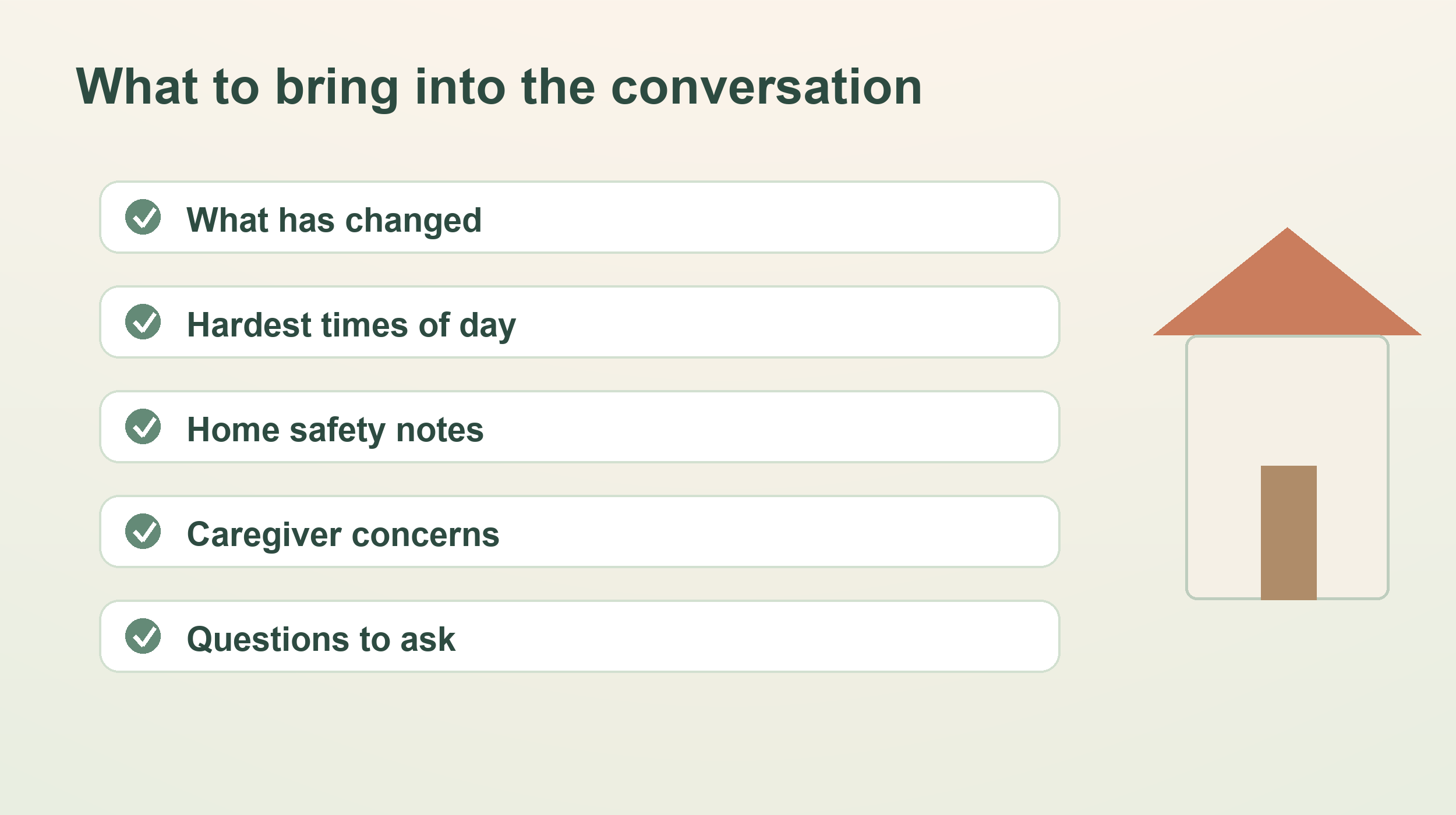
1. Write Down What Is Getting Harder
Start with the parts of the day that have changed. You do not need perfect notes. A short list is enough.
- Meals: Is your loved one skipping meals, leaving food out, or losing interest in cooking?
- Bathing and hygiene: Is bathing, dressing, grooming, or laundry becoming harder?
- Mobility: Is it harder to get out of a chair, walk through the home, use the bathroom, or get into the car?
- Reminders: Are medication reminders, appointments, hydration, or daily routines slipping?
- Home tasks: Are dishes, trash, clutter, or light housekeeping becoming difficult to keep up with?
- Transportation: Are errands, appointments, or outings becoming stressful or unsafe to manage alone?
These details help the consultation focus on real life. They also help your family avoid the common pattern of saying, "We need help, but we are not sure with what."
2. Notice the Hardest Times of Day
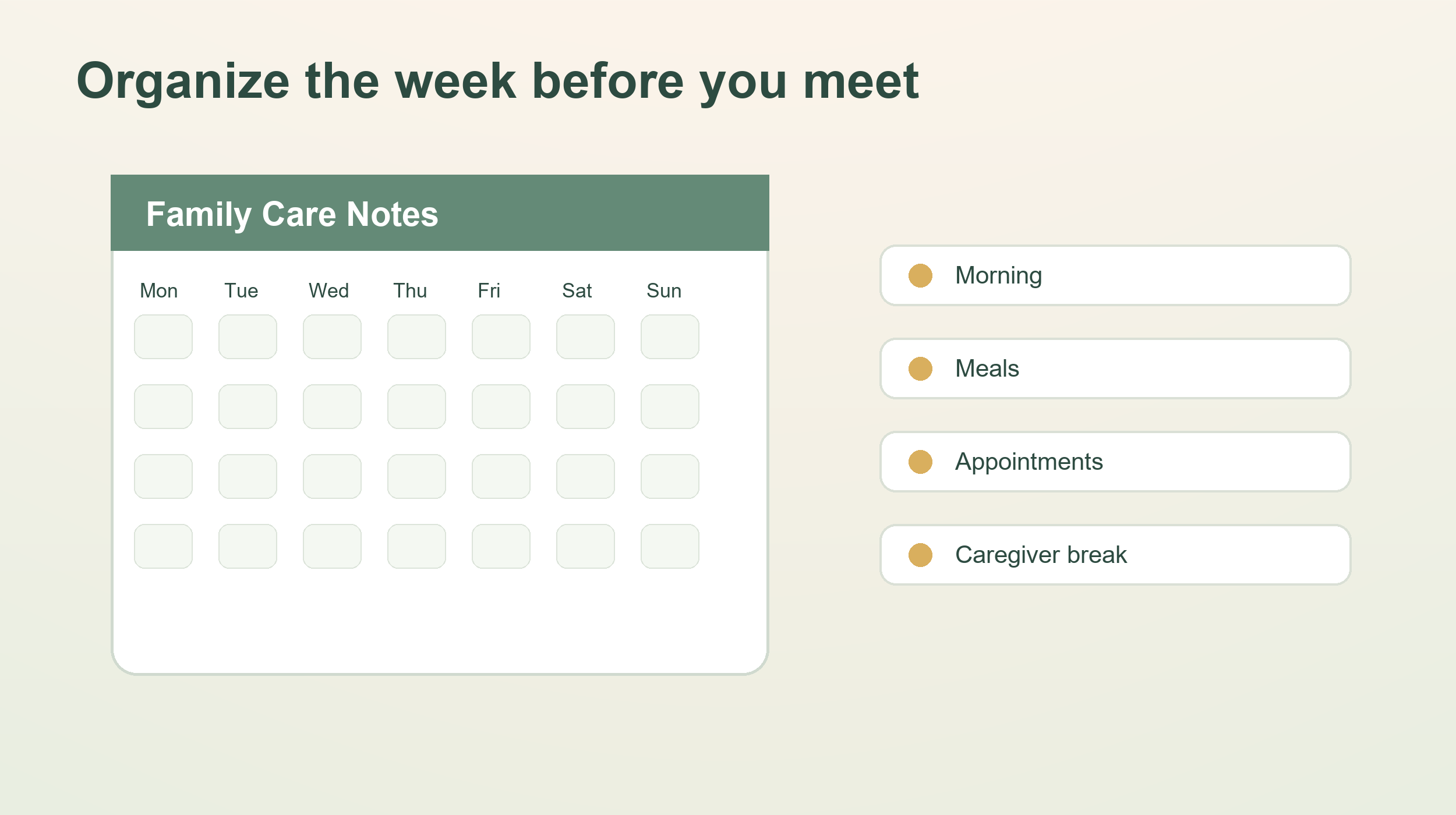
Care needs are rarely the same all day long. Your loved one may be mostly independent in the morning but need help in the evening. Or they may do well at home but struggle with appointments, bathing days, meal prep, or getting ready to leave the house.
Before the consultation, think through a normal week. Where does the stress show up most often?
- Morning routines
- Bathing or dressing
- Mealtimes
- Medication reminders
- Afternoons or evenings
- Doctor appointments or errands
- Weekends, when family schedules are stretched
This can help the care team discuss a schedule that fits the rhythm of the home rather than assuming every family needs the same type of support.
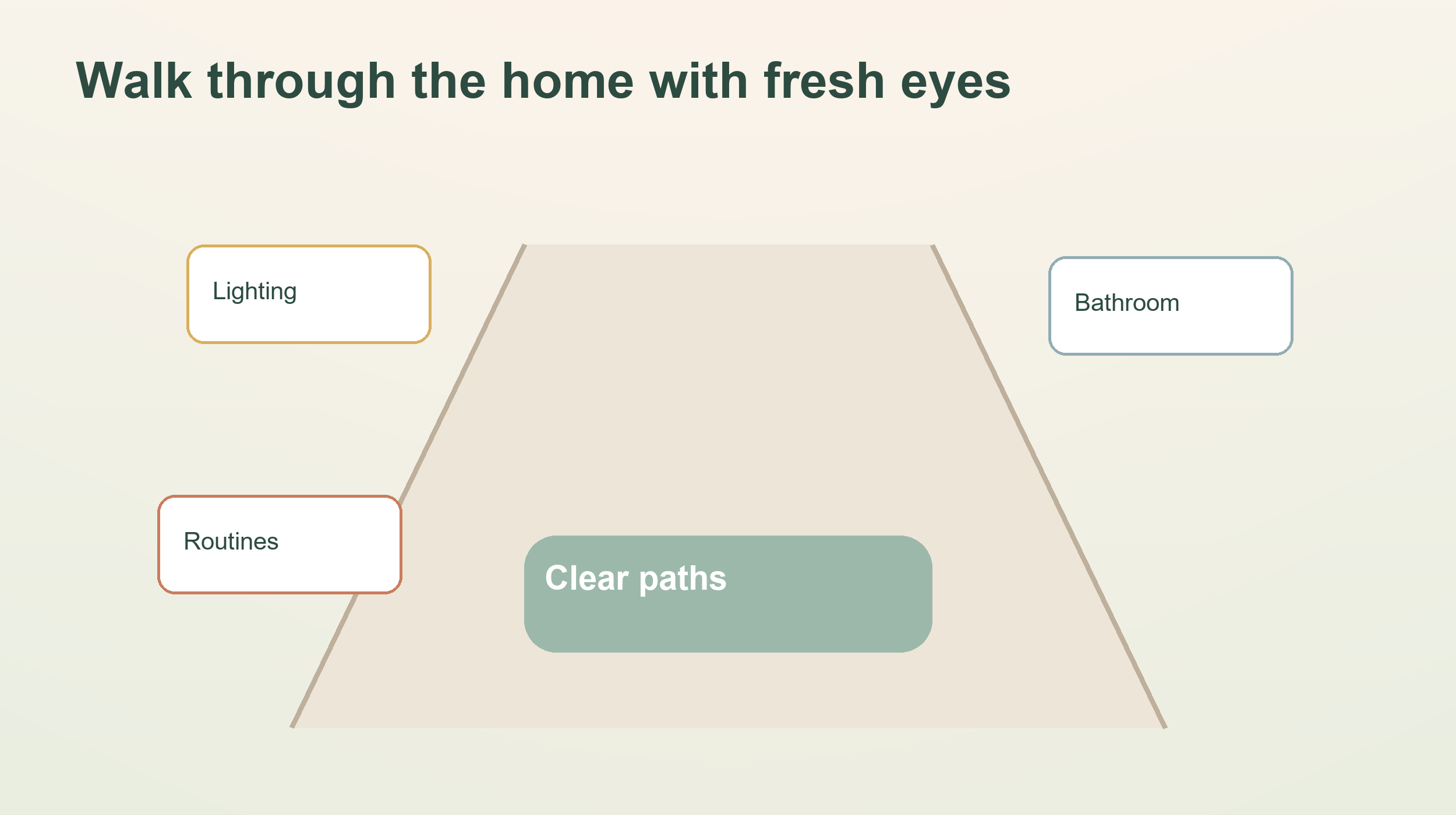
3. Walk Through the Home With Fresh Eyes
You do not need to turn the consultation into a home inspection. But a simple walk-through can help you notice where daily life has become harder or less safe.
The CDC's home fall prevention checklist encourages families to look for common hazards such as clutter on stairs, loose rugs, cords in walking paths, poor lighting, hard-to-reach items, and bathroom safety concerns. The National Institute on Aging also offers a home safety checklist families can use when thinking about how a loved one's needs are changing.
For your own notes, look at the spaces your loved one uses most: bedroom, bathroom, kitchen, living room, entryway, and path to the car. Ask yourself what feels easy, what feels risky, and what your loved one avoids.
If you are in San Antonio and arranging an in-home care consultation, local details matter too. Think about transportation routes, appointment locations, family distance, neighborhood access, and whether your loved one has nearby support during the day.
4. Include the Family Caregiver's Needs
The consultation is not only about the older adult. It is also about the family system around them.
The Family Caregiver Alliance explains that caregiver assessment should consider the caregiver's perspective, the caregiving situation, the care recipient's needs, the caregiver's well-being, and the resources available to support the family. That matters because family caregivers often become the planner, driver, reminder system, scheduler, and backup plan without realizing how much they are carrying.
Before the consultation, ask yourself:
- What tasks am I doing every week?
- What tasks are becoming physically or emotionally harder?
- Where do I need relief, backup, or a steadier routine?
- Are other family members involved, or am I carrying most of this alone?
- What would help our family feel clearer about next steps?
If you are tired, say so. If you are worried, say so. Asking for support is not a failure. It is often the first honest step toward a more sustainable care plan.
5. Bring Questions You Want Answered
A consultation should give you room to ask practical questions. You may want to ask:
- What kind of in-home care services may fit our situation?
- Could support start small and adjust over time?
- What tasks can a caregiver help with?
- How are care plans personalized?
- What if our loved one is hesitant about accepting help?
- How does transportation support work?
- What should we consider if there are memory changes or dementia-related concerns?
Promise Senior Solutions provides in-home care, companion care, bathing and hygiene support, respite care, dementia care, bed bound care, return-to-home care, and transportation support in San Antonio and surrounding areas. The right question is not, "Which service should we pick before the consultation?" The better question is, "What support would make daily life safer, calmer, and more manageable at home?"
When to Consider Support
It may be time to schedule a consultation if you are seeing repeated changes rather than one isolated concern. For example, your loved one may be missing reminders, avoiding showers, becoming more isolated, struggling after appointments, or needing more help with daily routines than family can reliably provide.
You do not have to wait until everything feels unmanageable. A consultation can simply help you understand options, ask better questions, and decide whether in-home senior care may be a good fit for your family.
FAQ
Do I need to know exactly what service we need before the consultation?
No. It is enough to bring examples of what is changing at home. The care conversation can help sort out whether companion care, personal support, respite care, transportation, dementia care, or another documented service may fit.
Should my loved one be part of the consultation?
When possible, it is helpful to include your loved one in a respectful way. If there are sensitive caregiver concerns, write those down so they can be discussed carefully and privately if appropriate.
What if my loved one does not want help?
Start with dignity and choice. Instead of leading with the word care, talk about support with specific routines: rides, meals, light help around the home, or someone to make the week easier. Small, practical support can feel less threatening than a major change.
Getting Started Is Easier Than You Think
You do not need a perfect plan before you ask for help. You only need a clear picture of what is happening and a willingness to talk through options.
If your family is beginning to wonder what kind of support may fit at home, Promise Senior Solutions can help you start with a free, no-obligation consultation. We will listen to your concerns, look at the home situation, and talk through a personalized care plan built around your loved one, your family, and the routines that matter most.