How Planned Respite Coverage Can Make a Hard Week More Manageable
A practical guide for San Antonio families who need backup before caregiving becomes too much to carry alone.
If you are caring for a parent, spouse, or loved one at home, you may already know that the hardest part of the week is not always the whole week. Sometimes it is bath day. Sometimes it is the evening routine. Sometimes it is the day with appointments, meals, laundry, reminders, and one more errand that cannot wait.
That is where planned respite coverage can help. Promise Senior Solutions offers respite care in San Antonio for families who need an experienced caregiver to step in with safe, compassionate support while the family caregiver rests, works, handles errands, or simply catches their breath.
Short Answer: What Is Planned Respite Coverage?
Planned respite coverage means scheduling dependable in-home support around the part of the week that is hardest for the family caregiver to carry alone. It is not giving up responsibility. It is creating a more realistic plan so your loved one has support and you have room to keep going.
The National Institute on Aging describes respite care as short-term relief for primary caregivers, and the CDC also encourages caregivers to make their own health and rest part of the care plan. In practical family life, that relief often works best when it is planned before the week becomes overwhelming.
Why Families Often Wait Too Long to Ask for Respite Help
Many family caregivers wait because they are trying to be loyal. They may think, "I can handle this," or "It is only a few hours," or "My loved one will not want someone new in the home." Those feelings are understandable.
But caregiving usually grows in small steps. One weekly grocery run becomes meal planning. One medication reminder becomes several reminders. One appointment becomes transportation, paperwork, getting dressed, getting out the door, and follow-up calls.
By the time a caregiver says, "I am exhausted," the family may have been needing backup for a while. Planned respite coverage gives families a way to start smaller and more thoughtfully.
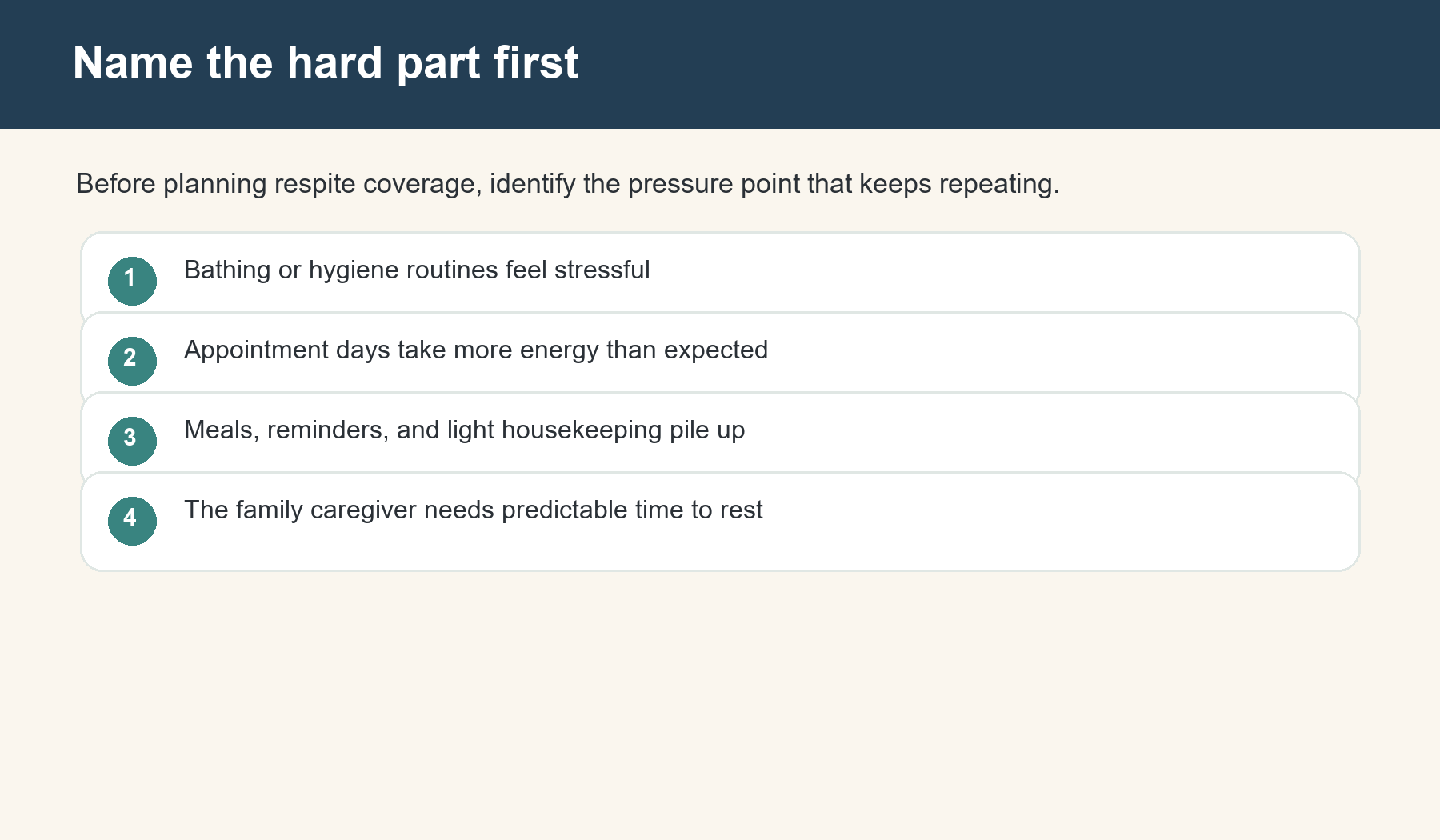
1. Start by Naming the Hardest Part of the Week
You do not have to solve every care question at once. A good first step is to name the part of the week that feels the heaviest.
- Is there a day when bathing, dressing, or hygiene support is becoming stressful?
- Is there a time of day when meal preparation, reminders, or light housekeeping pile up?
- Are appointment days harder because transportation and getting ready take more energy?
- Does your loved one need companionship or supervision while you work, rest, or handle family responsibilities?
- Are dementia routines becoming harder to keep calm and consistent?
When you name the pressure point, the conversation becomes less overwhelming. Instead of asking, "Do we need care?" you can ask, "Where would a few hours of steady support help most?"
2. Build Respite Around Real-Life Routines
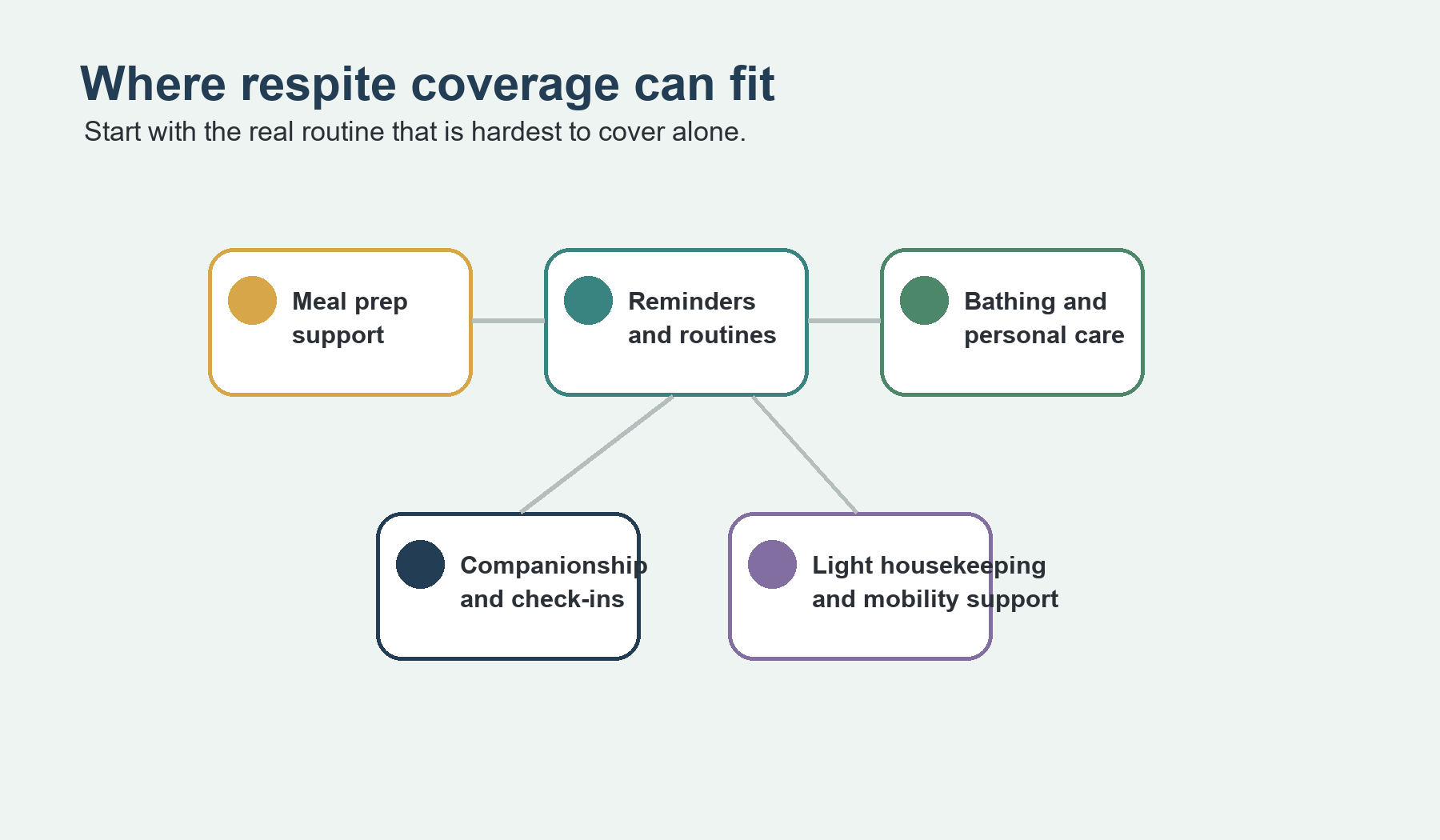
Respite care is most useful when it fits the real week your family is living. For one household, that may mean support during a morning routine. For another, it may mean help during the late afternoon when a spouse is tired. For another, it may mean coverage on the day a daughter has work, school pickup, or her own medical appointment.
Promise Senior Solutions can discuss respite care that may include practical non-medical support such as meal preparation, medication reminders, light housekeeping, bathing and personal care, and mobility or transfer support when appropriate to the care plan.
The goal is not to replace the family. The goal is to add dependable help where the family is carrying too much alone.
3. Use Respite to Protect Dignity, Not Just Time
Respite is often described as a break for the caregiver, and that matters. But it can also protect dignity for the older adult. Some personal care routines feel easier with a trained caregiver than with an adult child or spouse. Some families find that outside support lowers tension around bathing, dressing, meals, or reminders.
That does not mean every transition is simple. A loved one may need time to adjust. Starting with a specific routine can make support feel less abrupt. For example, a caregiver might come for a planned block of time to help with lunch, light housekeeping, companionship, and safety check-ins while the family caregiver steps away.
4. Plan Before the Crisis Moment
Respite care can be especially helpful when it is not treated as a last-minute scramble. Waiting until everyone is worn down can make decisions feel urgent and emotional. Planning ahead gives the family time to talk through preferences, routines, personalities, and practical needs.
A simple planning conversation might include:
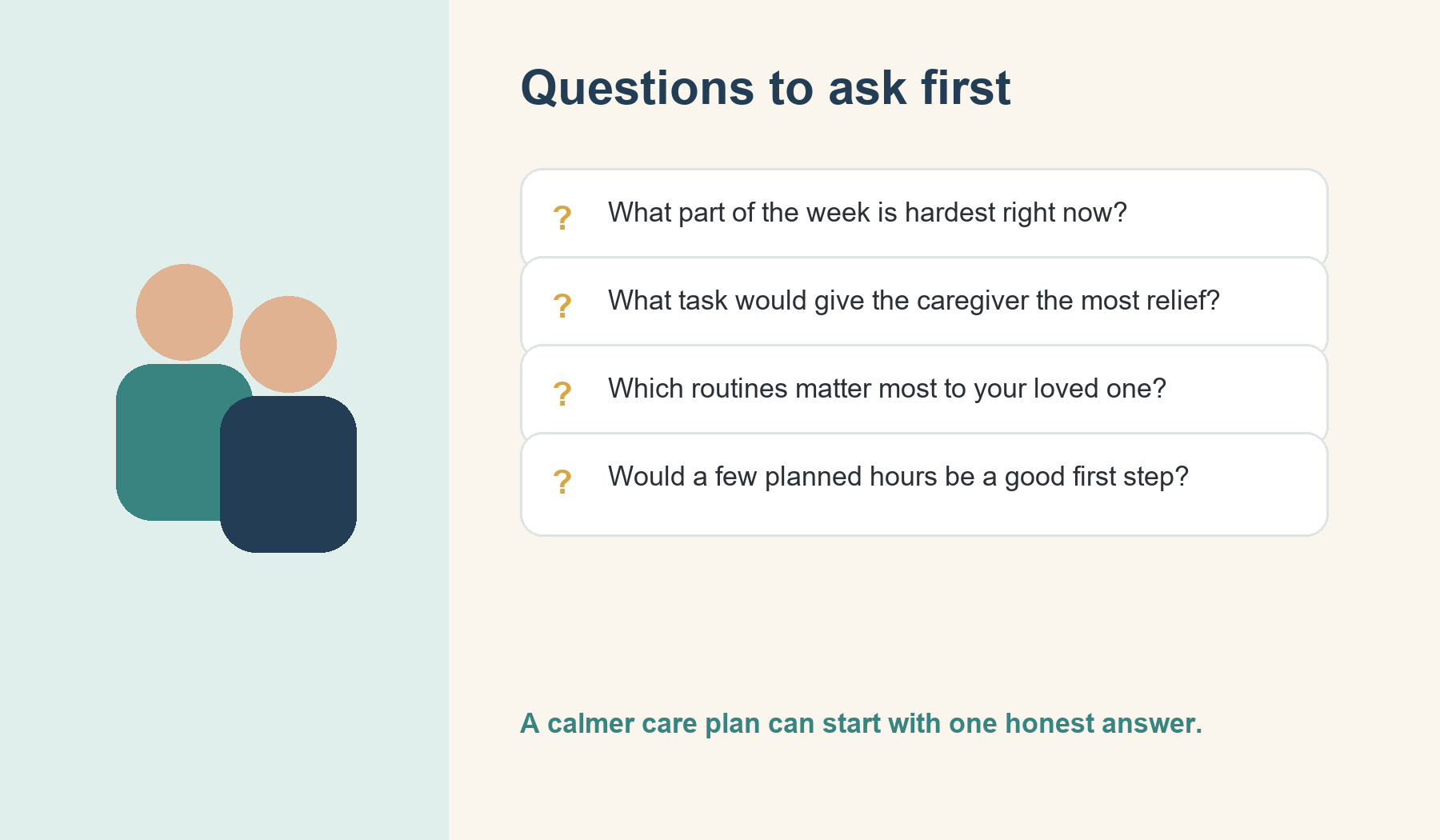
- What part of the week is hardest right now?
- What tasks does the family caregiver need relief from first?
- What routines matter most to your loved one?
- What would help the home feel calmer and more predictable?
- What questions should we ask before starting in-home care?
This kind of planning is not about panic. It is about making the week more manageable before stress becomes the only guide.
5. Know When It May Be Time to Consider Support
Every family situation is different, but there are common signs that respite coverage may be worth discussing.
- The caregiver is skipping sleep, meals, appointments, or personal responsibilities.
- One routine is creating repeated stress or family conflict.
- Your loved one needs more help with bathing, meals, reminders, mobility, or companionship.
- The family caregiver cannot safely or consistently cover every need alone.
- Siblings or relatives agree help is needed but are unsure where to start.
If you recognize one or two of these signs, it does not mean you have failed. It may simply mean the care plan needs more support.
How Promise Senior Solutions Can Help San Antonio Families
Promise Senior Solutions provides in-home senior care in San Antonio and surrounding areas, including respite care for families who need reliable support at home. Care plans can be personalized through a free, no-obligation consultation so the conversation begins with your loved one, your home, and the routines that matter most.
Respite care may be a few hours of relief, help around a difficult routine, or part of a broader in-home care plan. The right starting point depends on your family, your loved one, and the kind of support that would make the week feel more stable.
Frequently Asked Questions
Is respite care only for emergencies?
No. Respite care can be planned ahead around the part of the week that is hardest to manage. Planning support early often makes the conversation calmer and more practical.
Can respite care help if my loved one only needs a few hours of support?
Yes. Many families start with a specific routine or block of time, such as bathing support, meal preparation, companionship, light housekeeping, reminders, or coverage while the family caregiver rests or handles other responsibilities.
Does respite care replace the family caregiver?
No. Respite care is designed to support the family caregiver and the older adult. The family remains involved while an experienced caregiver provides practical in-home help.
Getting Started Is Easier Than You Think
If caregiving has started to take over more of the week, start with one question: What is the hardest part to carry alone right now?
That answer can help you decide what kind of support to ask about first. Promise Senior Solutions can help San Antonio families talk through in-home care options, respite coverage, and practical next steps without pressure. Asking for help is not giving up. It is building a plan that respects your loved one and gives the family room to keep showing up.
Hello, World!