Memory care and daily routines
A practical guide for San Antonio families who are trying to build calmer routines at home.
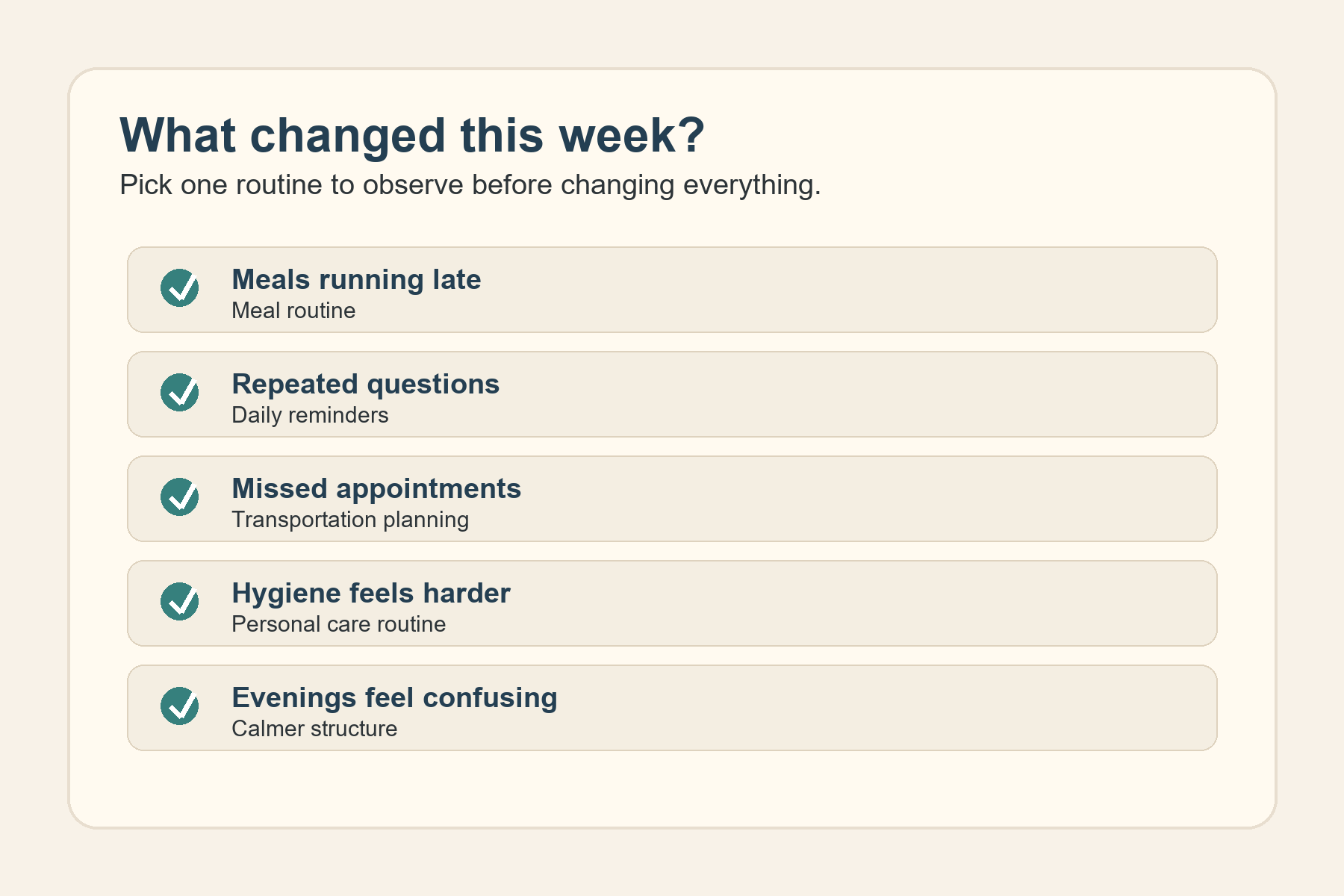
If you are noticing that your loved one's day is getting harder to follow, it can be difficult to know what to do first. Maybe the same question is being asked again and again. Maybe meals are running late. Maybe medication reminders, appointments, bathing routines, or bedtime steps are becoming more confusing.
The goal is not to panic or take over everything at once. The goal is to name what is changing, protect dignity, and build more support around the parts of the day that need it most.
Direct answer: When memory changes start disrupting the day, families can begin by tracking which routine is breaking down. Then simplifying that routine, and considering non-medical in-home support when the pattern is becoming too much to manage alone. Promise Senior Solutions can help San Antonio families talk through care options, including companion care, respite care, dementia care, and personalized in-home support.
Memory changes often show up in routines first
Many families do not notice a single dramatic moment. They notice a pattern. A parent who always made breakfast starts skipping it. A spouse who managed appointments begins asking what day it is several times. A loved one who used to bathe, dress, and get ready without help now seems unsure about the next step.
The National Institute on Aging explains that some forgetfulness can happen with age, but memory problems that interfere with everyday life deserve attention and may need evaluation. The CDC also notes that dementia is not normal aging and can affect remembering, thinking clearly, making daily decisions, and handling daily tasks.
This article is not medical advice, and it should not replace a conversation with a qualified health professional. But from a family-care planning standpoint, routine changes are useful information. They tell you where support may be needed at home.
1. Start by naming the routine that is changing
A common caregiver mistake is trying to solve the whole situation at once. That can make the week feel bigger and heavier than it already is. Instead, start with one routine.
Ask yourself:
What part of the day feels most confusing right now?
Is it morning, meals, medication reminders, hygiene, appointments, evenings, or bedtime?
Does the problem happen once in a while, or is it becoming a pattern?
Who in the family is currently carrying that responsibility?
Writing down a few examples can help. You are not building a case against your loved one. You are gathering clear information so the family can make a calmer decision.
2. Keep the plan simple and familiar
When memory changes are part of the picture, more instructions are not always better. A simple routine that feels familiar may be easier to follow than a brand-new system with too many moving parts.
The Alzheimer's Association notes that daily routines can help both the caregiver and the person living with Alzheimer's, while still allowing flexibility as abilities change. For families, that may mean keeping breakfast items in the same place, using a simple written cue, laying out clothing in order, or building appointment reminders around the same weekly rhythm.
The best routine is usually the one your loved one can accept without feeling corrected, rushed, or embarrassed.
3. Watch for caregiver overload, not just memory changes.
Memory-related routine changes do not affect only the older adult. They affect the daughter who calls three times a day. They affect the spouse who is sleeping lightly because evenings have become unpredictable. They affect the family member who is managing appointments, meals, transportation, hygiene concerns, and reminders on top of work and home life.
If you are carrying most of this, it is worth asking whether the plan depends too much on one person. That does not mean you are failing. It means the support system may need to be adjusted.
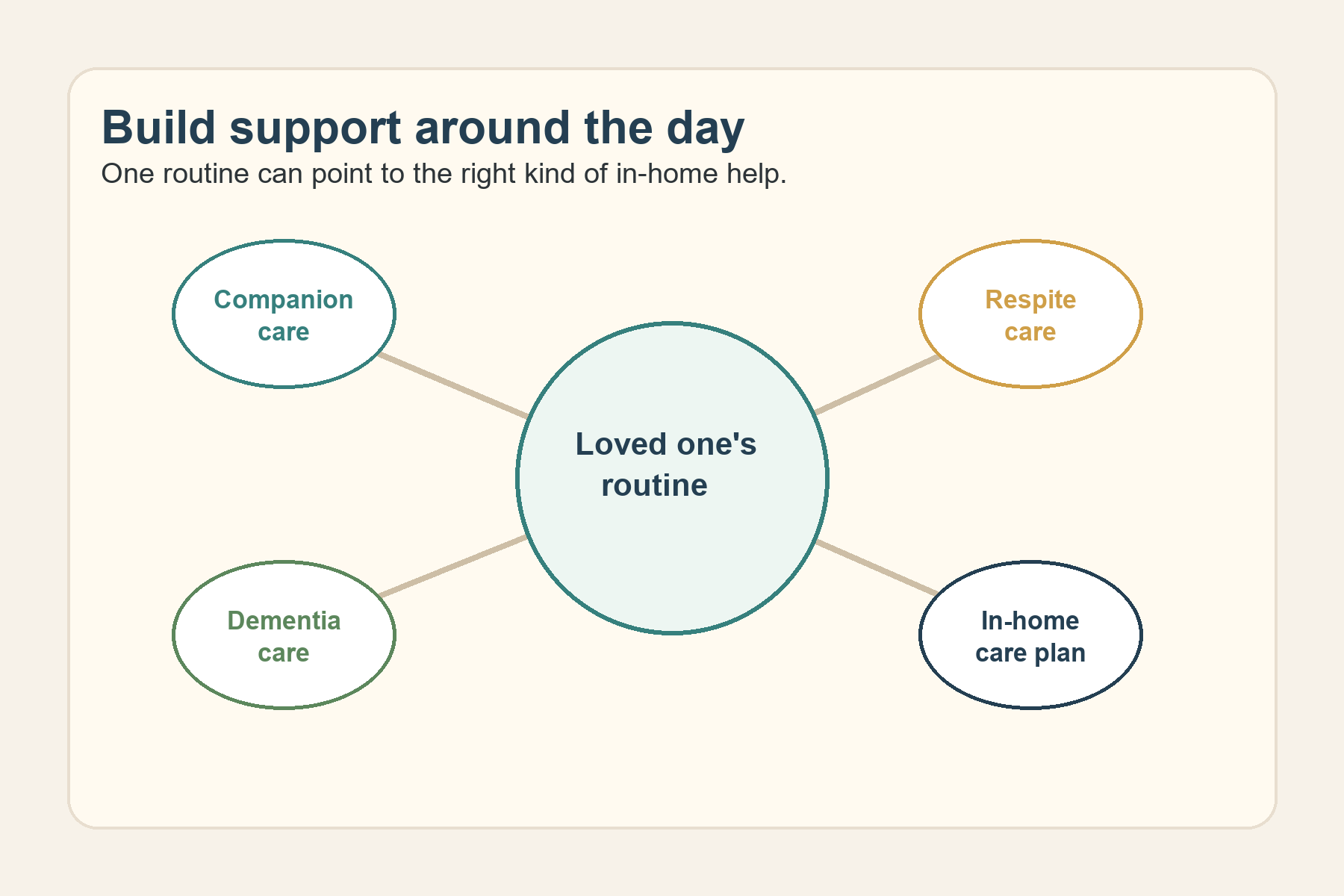
Non-medical in-home senior care can help by adding practical support around the day. Depending on the care plan, that support may include companionship, routine reminders, meal preparation support, light housekeeping, respite care for family caregivers, transportation help, or dementia-focused in-home support.
4. Protect dignity while adding support
One of the hardest parts of memory-related care is the conversation. Your loved one may not see the same changes you see. They may feel embarrassed, defensive, or afraid that help means losing control.
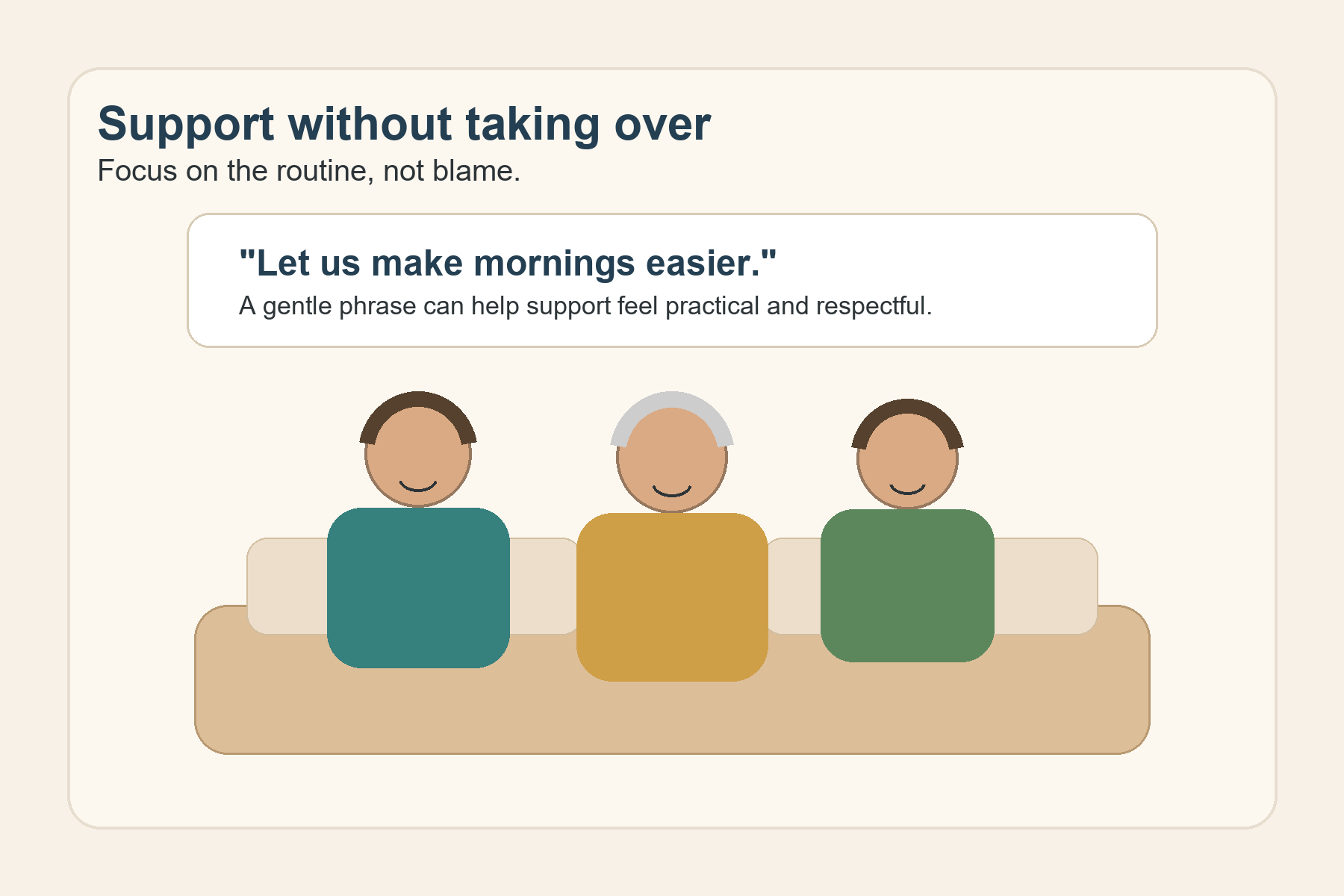
Try language that focuses on the routine, not blame.
You might say:
I noticed mornings have been feeling more rushed. Could we make that part of the day easier?
I want you to have support without everyone feeling stressed.
Let's start with one part of the week and see what would help.
This is about keeping your day comfortable, not taking over.
The tone matters. A calm conversation can make support feel less like a loss and more like a practical step.
5. Look at the home environment with fresh eyes
When routines are changing, the home setup may need small adjustments too. The National Institute on Aging offers home safety guidance for Alzheimer's caregiving and explains that people may become less able to manage some things around the home over time.
For a family caregiver, this does not mean turning the home into a hospital. It may mean asking practical questions:
Are walkways clear?
Are frequently used items easy to find?
Is the bathroom routine becoming harder?
Are appointment notes, meal cues, or daily reminders visible but not overwhelming?
Does the evening routine need more structure?
Small changes can support a calmer day, especially when paired with consistent human support.
When should San Antonio families consider in-home support?
It may be time to explore support when the same routine keeps breaking down, family caregivers are stretched thin, or your loved one wants to remain at home but needs more help than the family can reliably provide alone.
For San Antonio families, Promise Senior Solutions offers in-home care, companion care, respite care, dementia care, bathing and hygiene support, transportation, and other documented care options. Care is built around a personalized care-plan approach, beginning with a free, no-obligation consultation.
A consultation does not have to mean making a major decision that day. It can simply help you understand what support may fit the routine you are worried about.
A practical first step:
Before the next family conversation, choose one routine to observe for a week. Write down what is happening, when it happens, who is helping, and what feels hardest. Then ask: What kind of support would make this part of the day calmer and safer to manage?
You do not have to figure out the whole future at once. Start with the part of the week that is asking for attention.
If memory changes are disrupting your loved one's daily routine, Promise Senior Solutions can help you talk through care options for support at home in San Antonio and surrounding areas. Schedule a free, no-obligation consultation to get clarity on the next step that may fit your family.