Match the Concern to the Right In-Home Support
A practical guide for families who are noticing changes but are not sure what kind of help fits.
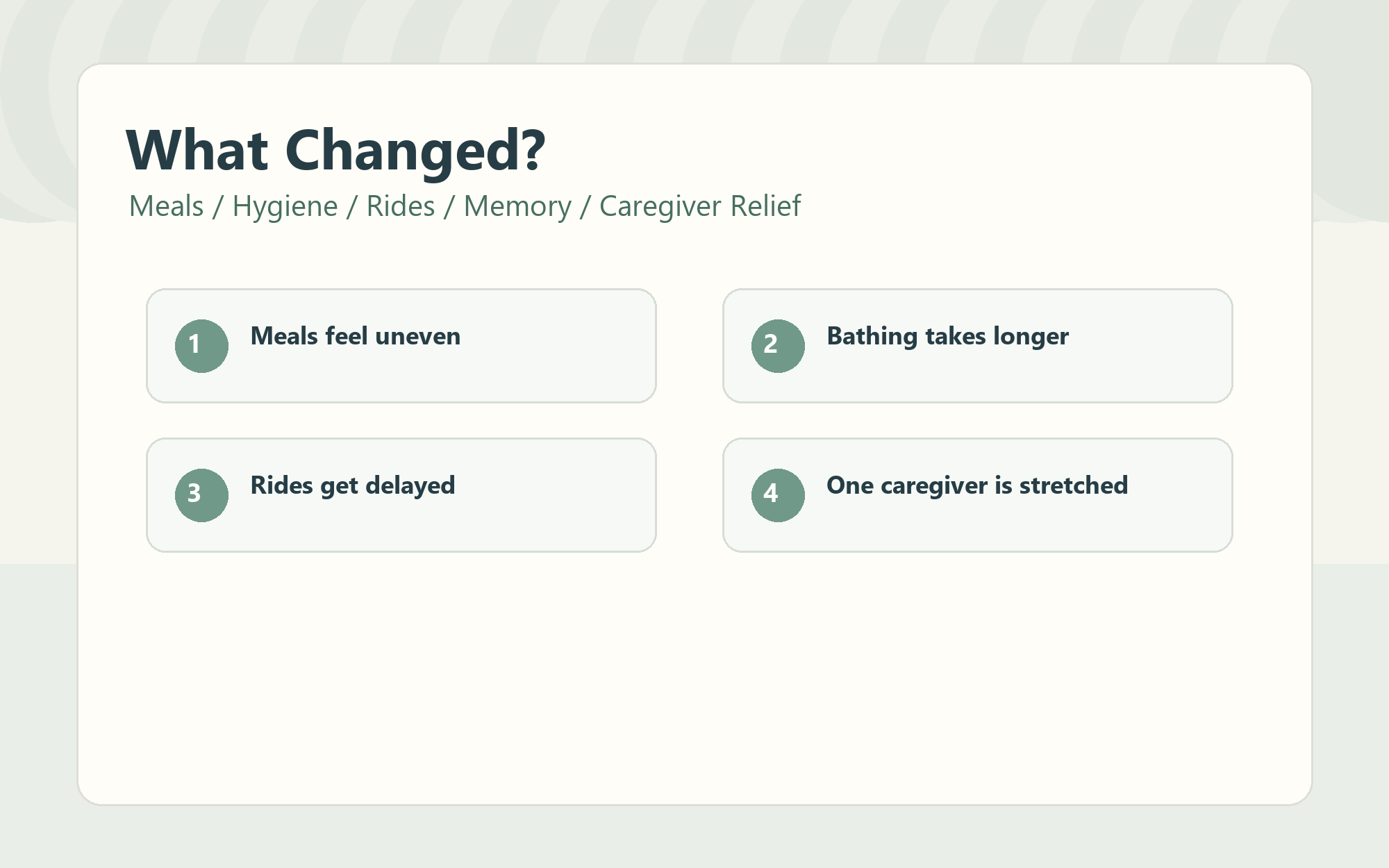
When something changes for an older loved one, families often feel the pressure before they have the words for it. Maybe meals are becoming inconsistent. Maybe bathing or dressing takes more patience than it used to. Maybe appointments are being missed, or one family caregiver is becoming the person everyone calls first.
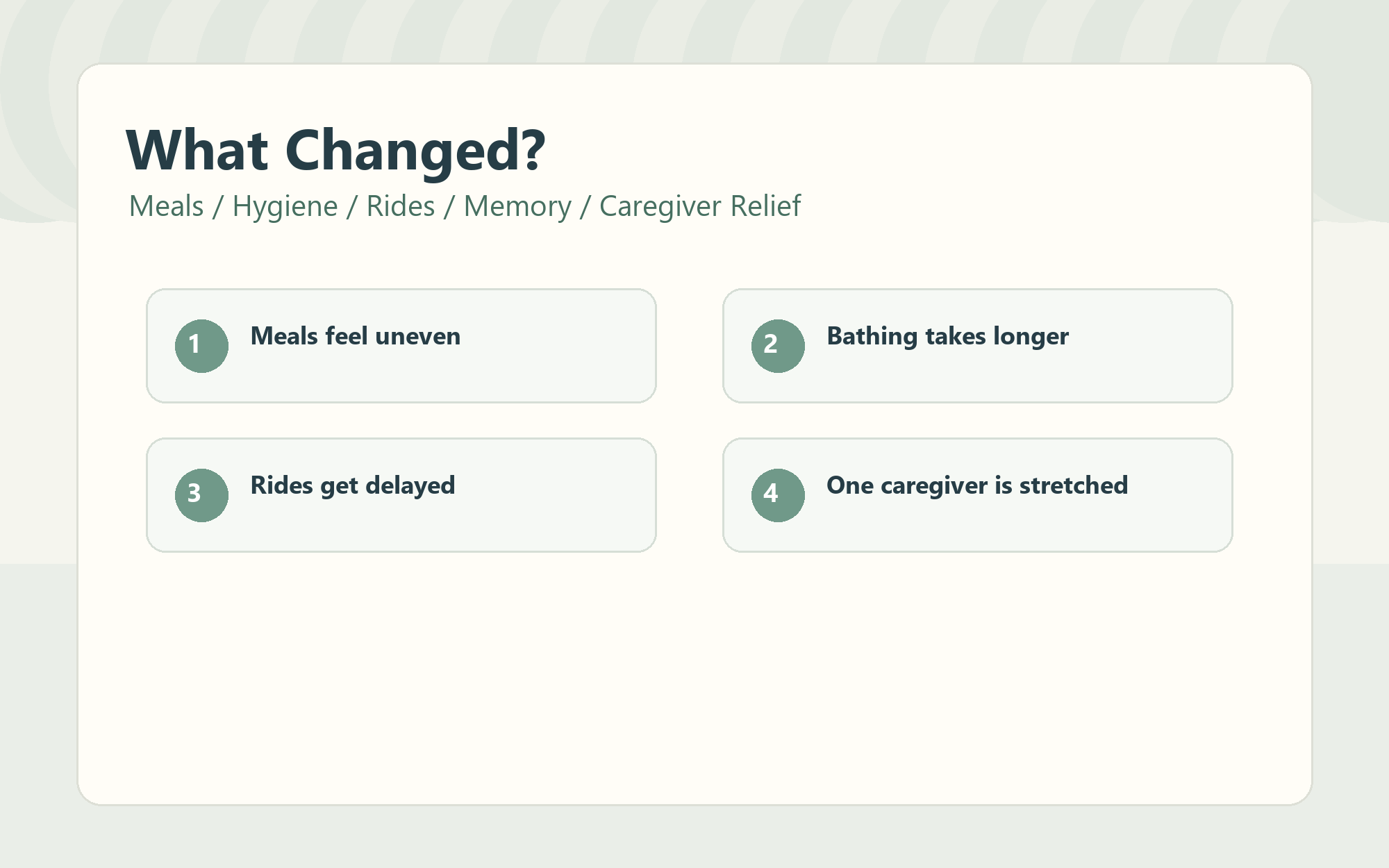
The hard part is that the question is rarely just, "Do we need help?" A better first question is, "What part of the day is getting harder?" Once you can name the concern, it becomes easier to talk about the kind of support that may fit.
Promise Senior Solutions helps San Antonio families think through these care questions with a free, no-obligation consultation and a personalized care-plan approach. The goal is to understand the moment that is changing and match it with respectful support at home.
What Does It Mean to Match the Concern to Support?
Matching the concern to support means looking at the real daily situation before choosing a service. The National Institute on Aging notes that older adults living at home may need different kinds of help, from household tasks to personal care such as bathing, dressing, grooming, eating, and moving around.
For families, that can be a relief. You do not have to solve every possible future need at once. You can begin with the part of the routine that is causing the most stress right now.
1. If the Concern Is Loneliness or Withdrawal
A loved one may still be physically able to manage many tasks but seem less engaged than before. They may stop calling friends, lose interest in familiar activities, or spend more time alone than feels healthy for them.
In that situation, companion care may be a helpful starting point. Promise Senior Solutions describes companion care as support that can include conversation, shared activities, walks, hobbies, meal preparation support, gentle reminders, light housekeeping, laundry, and check-ins.
Someone to talk with during the day
Help keeping simple routines steady
Light support around the home
A regular check-in that gives the family more peace of mind
Companion care should not be described as treatment for loneliness, depression, dementia, or any medical condition. It is practical, human support at home.
2. If the Concern Is Bathing, Dressing, or Hygiene
Personal care changes can be emotional. A parent may want privacy. A spouse may feel physically tired from helping. An adult daughter may worry that the conversation will embarrass the person she loves.
This is where bathing and hygiene care may fit: gentle, respectful help with bathing, dressing, and hygiene routines from certified caregivers.
The key is dignity. Instead of saying, "You cannot do this anymore," try starting with what would make the routine feel safer, calmer, or less exhausting. A care plan can be built around the person's preferences, pace, and privacy needs.
3. If the Concern Is Missed Appointments or Errands
Transportation concerns often start quietly. A loved one may delay appointments, avoid errands, or become nervous about getting in and out of the car. Family schedules can become hard to sustain.
Promise Senior Solutions offers escorted and un-escorted transportation. Escorted transportation can include door-to-door help, mobility assistance, and support for appointments and errands with an experienced caregiver at the client's side. Un-escorted transportation can support clients who need door-to-door help but do not need a caregiver to remain with them throughout the outing.
For some families, transportation support is about making appointments, errands, and necessary outings easier to keep.
4. If the Concern Is One Caregiver Carrying Too Much
Sometimes the concern is not only what your loved one needs. It is also what the family caregiver can keep carrying. One person may be handling meals, visits, phone calls, appointments, laundry, and emotional support while trying to manage work and home life.
The National Institute on Aging offers caregiver resources on sharing responsibilities, which can help families think through where more support may be needed.
Respite care may be appropriate when a family caregiver needs time to rest, recharge, handle responsibilities, or simply have dependable backup. Promise Senior Solutions documents respite care as support that can include meal preparation, medication reminders, light housekeeping, bathing and personal care, and mobility and transfers when appropriate.
Respite care does not mean the family is stepping away. It can be a way to keep care more sustainable.
5. If the Concern Is Memory Change or Familiar Routines
Memory changes can make ordinary routines feel less predictable. A loved one may repeat questions, misplace items, resist a once-familiar task, or become uneasy when the day changes too quickly.
For dementia-related support, Promise Senior Solutions documents specialized in-home dementia care from trained and certified caregivers who follow a personalized care plan focused on safety, calm, comfort, and familiar routines at home.
The National Institute on Aging also describes home care support in Alzheimer's caregiving resources, including help with daily activities, light housekeeping, transportation, and errands.
Families should avoid treating home care as a cure or a guarantee. A better way to frame it is support around familiar routines, communication, and daily comfort.
6. If the Concern Is Getting Around Safely at Home
If your loved one is having more trouble getting up from a chair, moving through the home, or managing daily tasks, the concern may involve hands-on support and a safer routine. The CDC's STEADI caregiver resources include fall-prevention and home-safety materials for families and caregivers.
This kind of support should be discussed carefully. It is not emergency medical transport, skilled nursing, or a promise that falls or complications can be prevented. It is practical nonmedical support that may help families build a calmer plan for daily life at home.
A Simple Way to Start the Conversation
If you are unsure where to begin, start with the changed moment, not the service name. Ask:
What part of the day feels harder than it used to?
What task is taking the most patience?
Where is the family feeling stretched?
What would feel respectful to your loved one?
What support would help without taking over?
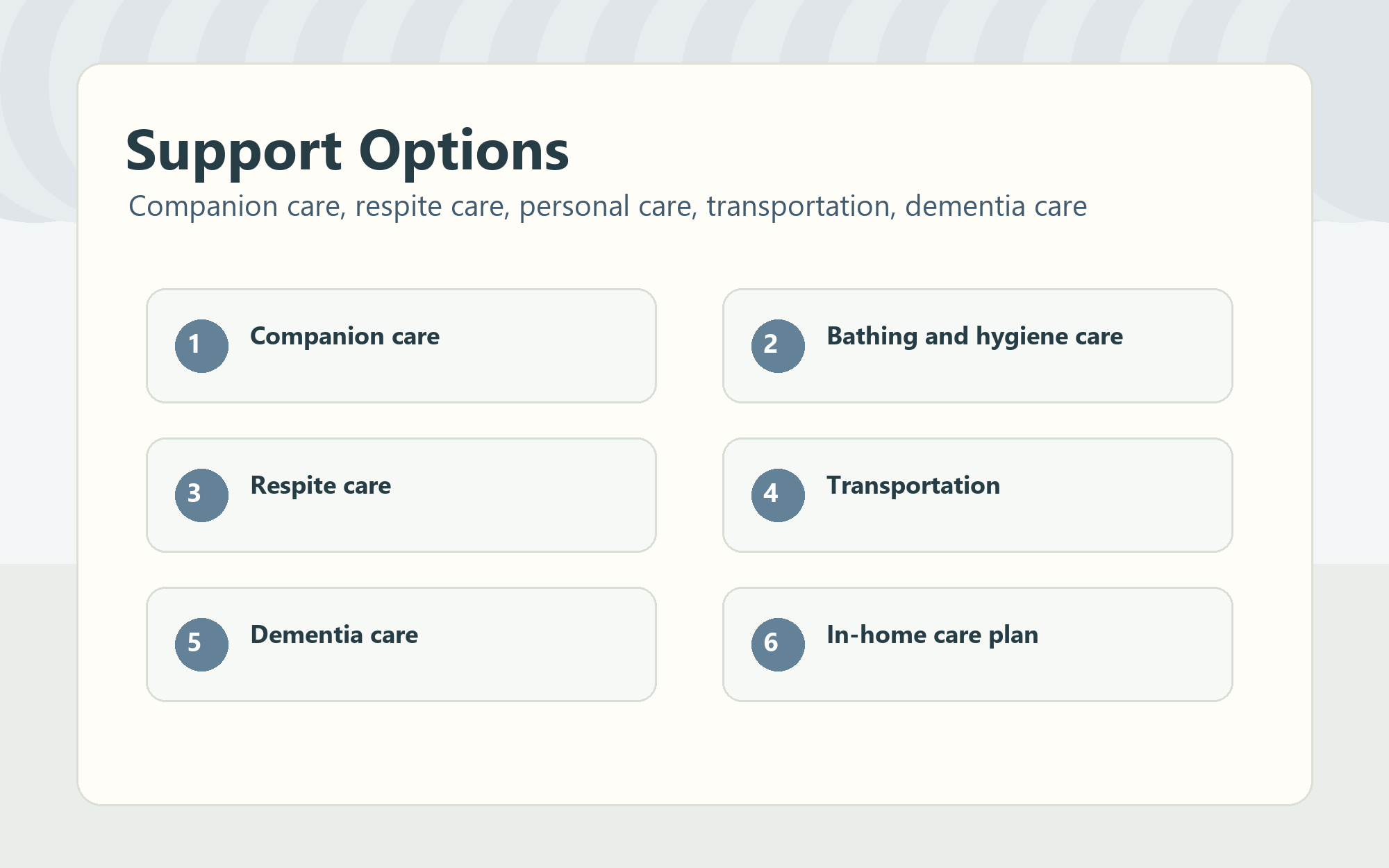
Those answers can point toward companion care, bathing and hygiene support, respite care, dementia care, transportation, return-to-home support, or a broader in-home care plan.
When Should a Family Consider In-Home Support?
Consider a care conversation when the same concern keeps showing up, when the family is rearranging life around one fragile routine, or when your loved one wants to stay at home but needs more support than the family can provide alone.
You do not need to have the whole answer before asking questions. A consultation can help clarify what is changing, what support may fit, and what kind of plan would feel respectful for your loved one.
Getting Started Is Easier Than Guessing Alone
The right support starts with a clear picture of the concern. For one family, that may mean transportation. For another, it may mean personal care. For another, it may mean respite for the family caregiver or dementia care built around familiar routines.
Promise Senior Solutions provides in-home care in San Antonio and surrounding areas, with documented services that include companion care, bathing and hygiene care, respite care, dementia care, bed bound care, return-to-home care, and transportation.
If you are noticing changes and are not sure what kind of help fits, start with a conversation. Promise Senior Solutions can help you ask practical questions and explore a personalized care plan for your loved one at home.
Frequently Asked Questions
How do I know what type of in-home support my parent needs?
Start by naming the part of the day that is becoming harder. Meals, companionship, hygiene, transportation, memory routines, caregiver relief, and mobility-related support may point to different kinds of help.
Does asking for in-home care mean our family is giving up?
No. For many families, asking for support is a way to keep care more sustainable while helping a loved one remain comfortable at home.
Can support begin with just one concern?
Yes. Many families begin with the most stressful or most frequent concern, then talk through whether a broader care plan is needed.