When Dressing Takes More Patience Than It Used To
Practical personal care support for San Antonio families
When dressing starts taking longer, it can be easy to focus only on the task: buttons, socks, shoes, balance, laundry, or getting ready on time. But for your loved one, dressing is rarely just a task. It is privacy. It is routine. It is preference. It is one more place where independence can feel tender.
If getting dressed takes more patience than it used to, you do not have to turn the moment into a crisis. You can slow down, look at what has changed, and consider what support would feel respectful at home.
Promise Senior Solutions offers bathing and hygiene care in San Antonio, along with in-home care and companion care that can be shaped around a personalized care plan. The goal is not to take over. The goal is to understand what is getting harder and add support in a way that still feels personal.
The Short Answer
Dressing changes may be a sign that your loved one needs more time, a safer setup, clearer choices, or hands-on help with personal care. A respectful first step is to talk about what feels difficult, what your loved one wants to keep the same, and where outside support might protect privacy instead of reducing it.
What Dressing Changes Can Tell a Family
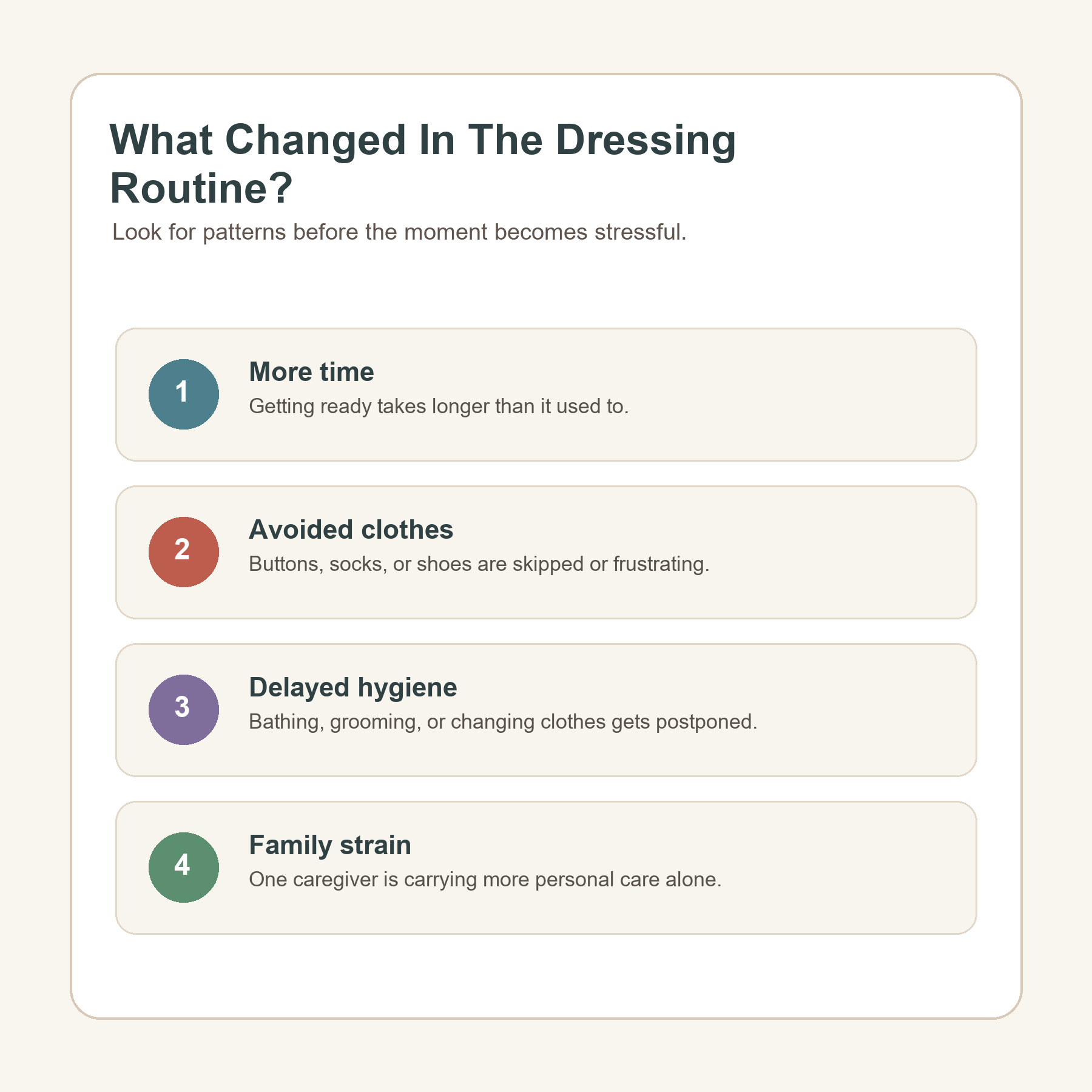
A slower dressing routine does not always mean something dramatic has happened. Sometimes the change is gradual. Small buttons become frustrating. A shower and outfit change take too much energy. Shoes sit by the door because bending over is harder. Laundry piles up because the routine feels like too much.
AARP notes that personal hygiene changes can be a good time to begin a conversation, not a reason to shame someone. A calm conversation earlier can give your loved one more voice in the plan.
Look for patterns, not one bad morning. Ask yourself:
Are clothes being worn for several days in a row?
Is your loved one avoiding certain outfits because fasteners are hard?
Does getting ready create tension before appointments or family visits?
Is bathing, grooming, or dressing being delayed because it feels tiring or embarrassing?
Is one family caregiver now responsible for personal care tasks that feel hard to manage alone?
1. Start With Preference, Not Correction
It is natural to want to fix the visible problem. But personal care is one of the most private parts of daily life. If the first message your loved one hears is correction, the conversation may close down quickly.
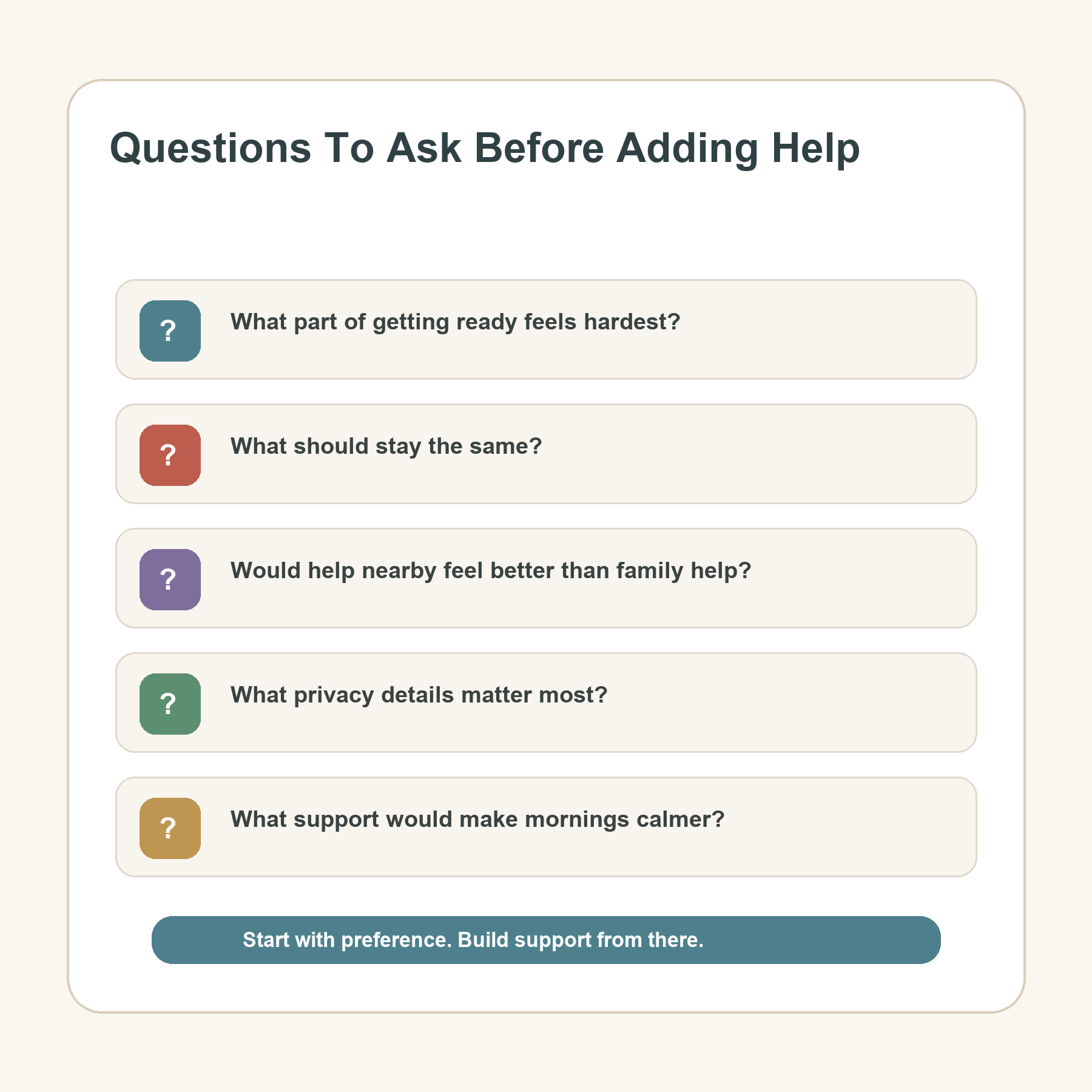
Start with preference instead. You might ask:
Which clothes still feel comfortable?
What part of getting dressed takes the most energy?
Would it help to lay out fewer choices?
Is there a time of day when getting ready feels easier?
Would you rather have help nearby, or only with certain steps?
This kind of conversation protects dignity because it treats your loved one as the decision-maker in their own routine. The National Institute on Aging includes bathing, dressing, and grooming among everyday caregiving areas where families may need practical tips and support.
2. Separate Safety From Embarrassment
Families sometimes avoid dressing and hygiene conversations because they feel too personal. That is understandable. But silence can make the situation feel heavier than it needs to be.
Try naming the practical issue without making it sound like a personal failure.
Instead of saying, "You are not getting dressed properly," you might say, "It seems like mornings are taking more energy lately. Would it help if we looked at the routine together?"
Instead of saying, "You need help bathing," you might say, "I want you to feel comfortable and safe. What part of the routine feels hardest right now?"
The words matter. AARP's dignity-focused caregiving guidance points out that help with bathing, dressing, toileting, or feeding can feel invasive or embarrassing. That is why patience, choice, and privacy are not extras. They are part of respectful care.
3. Make the Routine Easier Before It Becomes a Fight
Sometimes the best first step is a simpler routine.
Families may be able to reduce frustration by making the setup easier. Keep favorite outfits within reach. Choose comfortable clothing that still feels like your loved one's style. Reduce closet clutter, improve lighting, and build in more time before appointments or outings.
For some families, these changes are enough for a while. For others, the issue is not only organization. Your loved one may need respectful hands-on help with dressing, bathing, showering, hygiene, or the transition from one part of the routine to another.
That is where a care plan can help. Promise Senior Solutions' bathing and hygiene care is gentle, and respectful support with bathing and dressing routines. In-home care can also support the broader rhythm of the day, depending on what the family and care plan identify during consultation.
4. Decide What Family Should Do and What Support Could Cover
One of the hardest parts of personal care is that the family relationship can start to feel strained. A daughter may want to help but feel uncomfortable. A spouse may be exhausted. A loved one may accept help from a trained caregiver more calmly than from a family member, especially when privacy is involved.
That does not mean the family is stepping away. It may mean the family is choosing the right role.
A practical division might look like this:
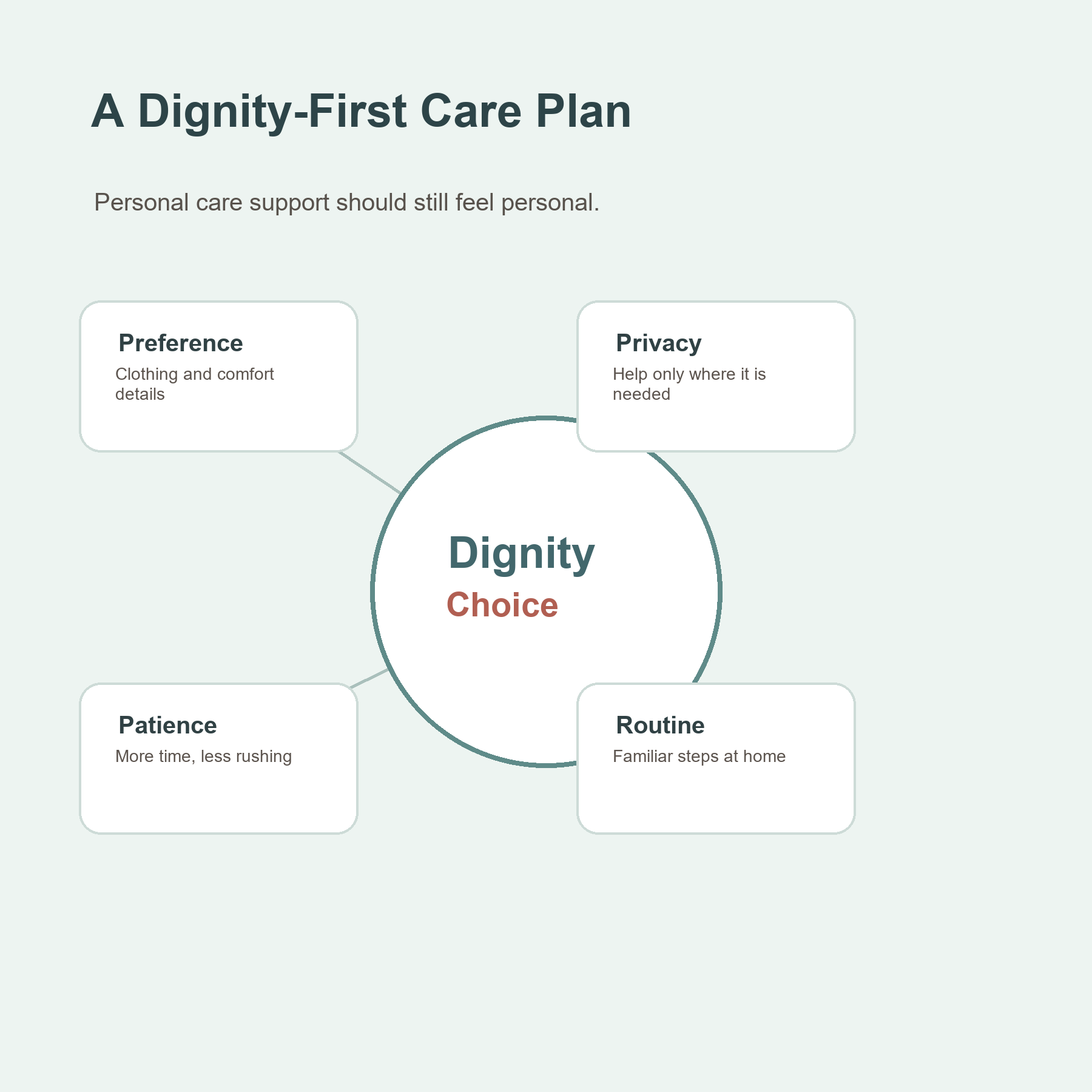
Family helps choose preferred clothing and comfort details.
A caregiver helps with bathing, dressing, or hygiene steps identified in the care plan.
Family keeps the bigger routine familiar and reassuring.
Everyone uses respectful language and avoids rushing when possible.
Caregiver health matters, too. MedlinePlus describes caregiving as including daily tasks such as bathing, eating, or taking medicine, and it also emphasizes that caregivers need support for their own well-being. If one person is carrying every personal-care task alone, it may be time to talk about backup.
5. Keep the Conversation Local and Practical
For San Antonio families, personal care support needs to fit real life. Maybe appointment mornings are tense. Maybe hygiene support has become too much for one spouse to manage respectfully. Maybe the family is not sure whether companion care, in-home care, or bathing and hygiene care is the right starting point.
You do not have to solve every question before asking for guidance. A free, no-obligation consultation can help the family look at the home, talk through the routine, and consider a personalized care plan. The right plan should respect your loved one's privacy, preferences, and daily rhythm.
When Should You Consider Dressing or Hygiene Support?
Consider a support conversation when dressing, bathing, or grooming changes are creating stress, delays, conflict, or safety concerns at home. Also consider support when one caregiver is doing more personal care than they can comfortably manage.
The point is to notice the routine early enough that your loved one can still help shape the answer.
FAQ
Does needing help with dressing mean my loved one cannot stay at home?
Not necessarily. Many older adults need help with certain routines while still wanting to remain at home. The question is what support would make the home routine more comfortable and realistic.
How can I bring up bathing or dressing help without embarrassing my loved one?
Begin with what feels harder, not what looks wrong. Ask about comfort, timing, privacy, and preferences. Keep the conversation calm and give your loved one room to say what kind of help would feel respectful.
Can Promise Senior Solutions help with bathing and dressing routines?
Yes. Promise Senior Solutions offers bathing and hygiene care in San Antonio, including gentle, respectful help with bathing and dressing routines. With no minimum visits, access to great care is within reach.
Getting Started Is Easier Than Carrying It Alone
When dressing takes more patience than it used to, it may be time to look at the routine with fresh eyes. Not with blame. Not with panic. With care.
Your loved one deserves support that protects dignity. Your family deserves guidance that makes the next step feel clearer. Promise Senior Solutions can help you explore respectful in-home care options in and build a plan around the real routines happening at home.