When Bathing Has Become Tense: How Dignity-Focused Hygiene Support Can Help
Bathing & Hygiene Care | A practical guide for San Antonio families
If bathing, dressing, or hygiene routines have started to feel tense, you are not alone. Many family caregivers notice the change slowly. A parent starts putting off showers. A spouse becomes embarrassed about needing help. A routine that used to be simple now takes more time, more patience, and more emotional energy than anyone expected.
Promise Senior Solutions helps San Antonio families look at these moments with care and respect. The goal is not to take over a loved one's life. The goal is to protect dignity while making daily routines feel safer, calmer, and more manageable at home.
What is dignity-focused hygiene support?
Dignity-focused hygiene support is gentle, respectful help with personal routines such as bathing, showering, dressing, grooming, and related hygiene tasks. For families, it can provide a calmer way to support a loved one without turning every personal-care moment into a stressful family conflict.
The National Institute on Aging lists personal care - including bathing, dressing, grooming, and using the toilet - as part of the everyday support older adults may need while aging at home. That does not mean every family needs the same type of help. It simply means personal care is a normal part of the care conversation, not something families should feel ashamed to discuss.
Why bathing can become harder at home
Bathing is personal. It involves privacy, temperature, balance, modesty, timing, and trust. When a loved one begins resisting help, it may not be stubbornness. It may be embarrassment, fear of slipping, fatigue, memory changes, pain, confusion, or simply the loss of control that can come with needing assistance.
For a family caregiver, this can be painful. You may know your loved one needs help, but you also do not want to make them feel exposed, rushed, or corrected. That is why the way support is offered matters as much as the task itself.
1. Start by noticing what is actually changing
Before you decide what kind of help is needed, write down what you are seeing. This keeps the conversation practical instead of emotional.
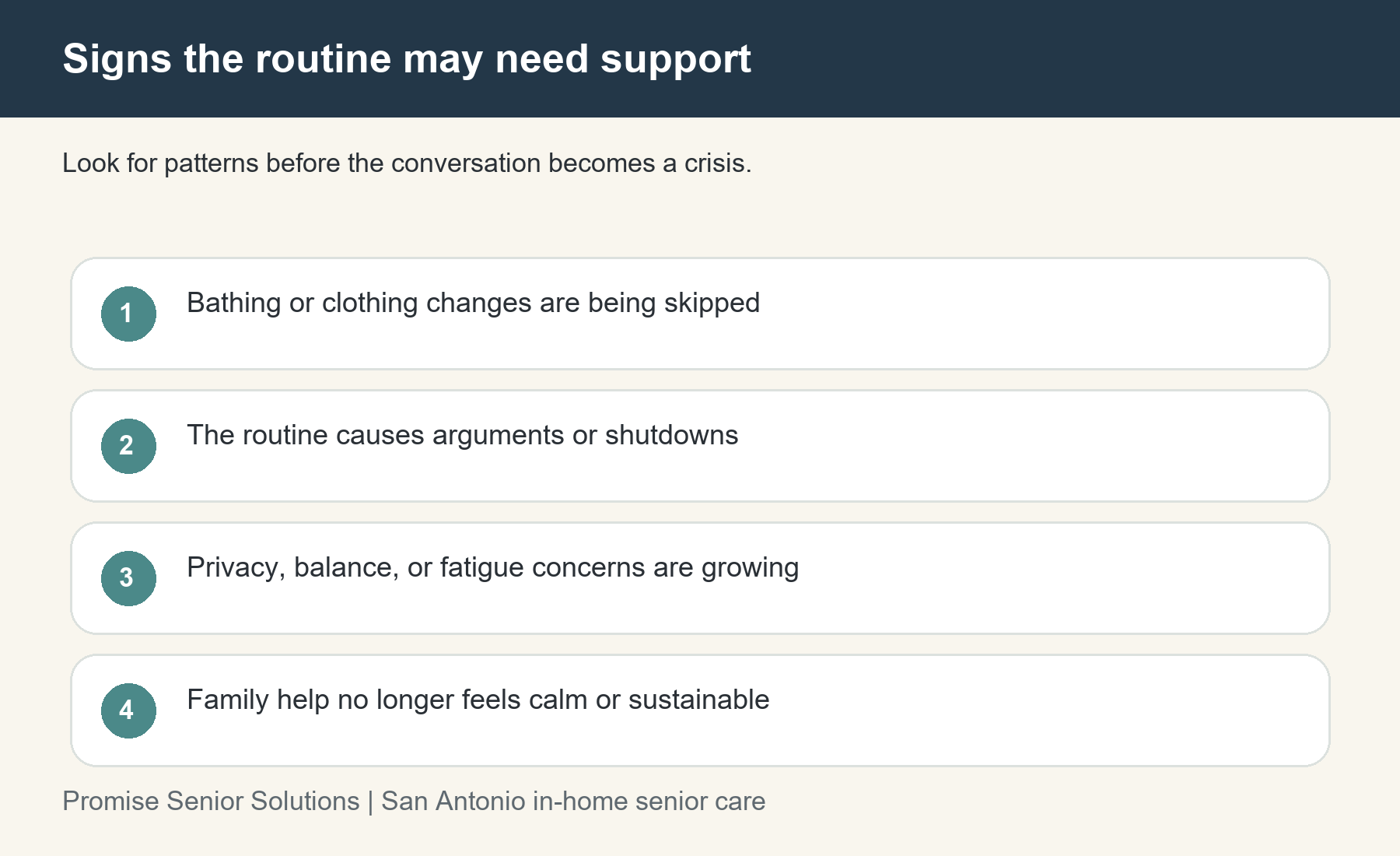
Is your loved one skipping showers or wearing the same clothes more often?
Does bathing take much longer than it used to?
Is the bathroom routine causing arguments, tears, or shutdowns?
Are towels, clothing, or supplies becoming disorganized?
Does your loved one seem afraid of stepping into the tub or shower?
A simple pattern can tell you a lot. Maybe the biggest issue is balance. Maybe it is modesty. Maybe it is memory. Maybe the family relationship itself makes personal care harder, even when everyone is trying to be kind.
2. Protect privacy as much as possible
Good hygiene support should never feel like a loss of personhood. Small choices can help your loved one feel more in control.
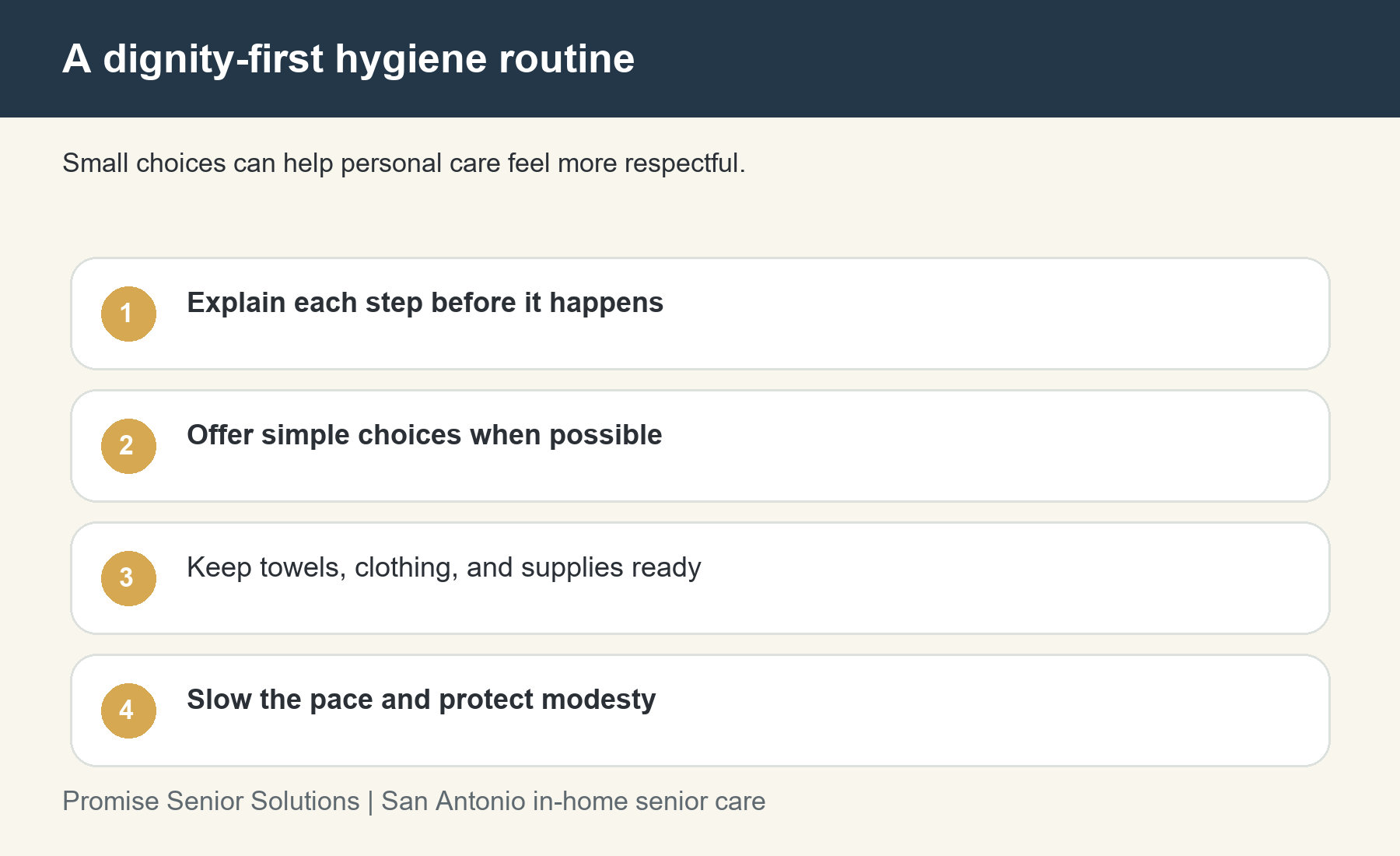
Explain what will happen before it happens.
Offer choices when possible, such as morning or afternoon, shower or sponge bath, blue shirt or gray shirt.
Keep the room warm and supplies ready before starting.
Use towels, robes, and clothing to preserve modesty.
Slow down instead of turning the routine into a rushed task list.
The Alzheimer's Association notes that bathing can be challenging for people living with Alzheimer's because receiving help with such an intimate activity can feel uncomfortable. Even when dementia is not part of the situation, the same principle applies: privacy and respect matter.
3. Separate safety concerns from pressure
Bathrooms can create real concerns for older adults because wet floors, tubs, toilets, and tight spaces can make movement more difficult. MedlinePlus and the CDC both point to bathroom safety steps such as grab bars, non-slip surfaces, and reducing tripping risks as common fall-prevention considerations.
But safety conversations work best when they are not framed as criticism. Instead of saying, 'You cannot do this anymore”, Try something softer and more specific: “I want this routine to feel easier and safer for you. What part feels hardest right now?”
4. Consider when a trained caregiver may be easier to accept
Sometimes a loved one resists help from family because the relationship is too close. An adult daughter helping with bathing may feel very different from a trained caregiver providing respectful personal-care support. A spouse may be physically tired but still feel guilty asking someone else to step in.
This is where outside support can help. Promise Senior Solutions offers Bathing & Hygiene Care in San Antonio, with gentle assistance for bathing, showering, dressing, and hygiene routines. Care can be discussed as part of a personalized in-home care plan so the support fits the person's needs, comfort level, and family routine.
5. Make the first step smaller than a full change
Families often wait because they think accepting help means a major life change. It does not have to start that way. The first step may be a conversation, a home consultation, or help during the routine that is causing the most stress.
You might start by asking:
Which part of the routine feels hardest for our family right now?
Would my loved one accept help better from someone outside the family?
What time of day is usually calmest?
What would help preserve modesty and choice?
Do we need bathing support only, or broader in-home care support too?
A smaller first step can make the decision feel less overwhelming. It also gives your family room to learn what type of support your loved one accepts best.
When should a San Antonio family consider hygiene support?
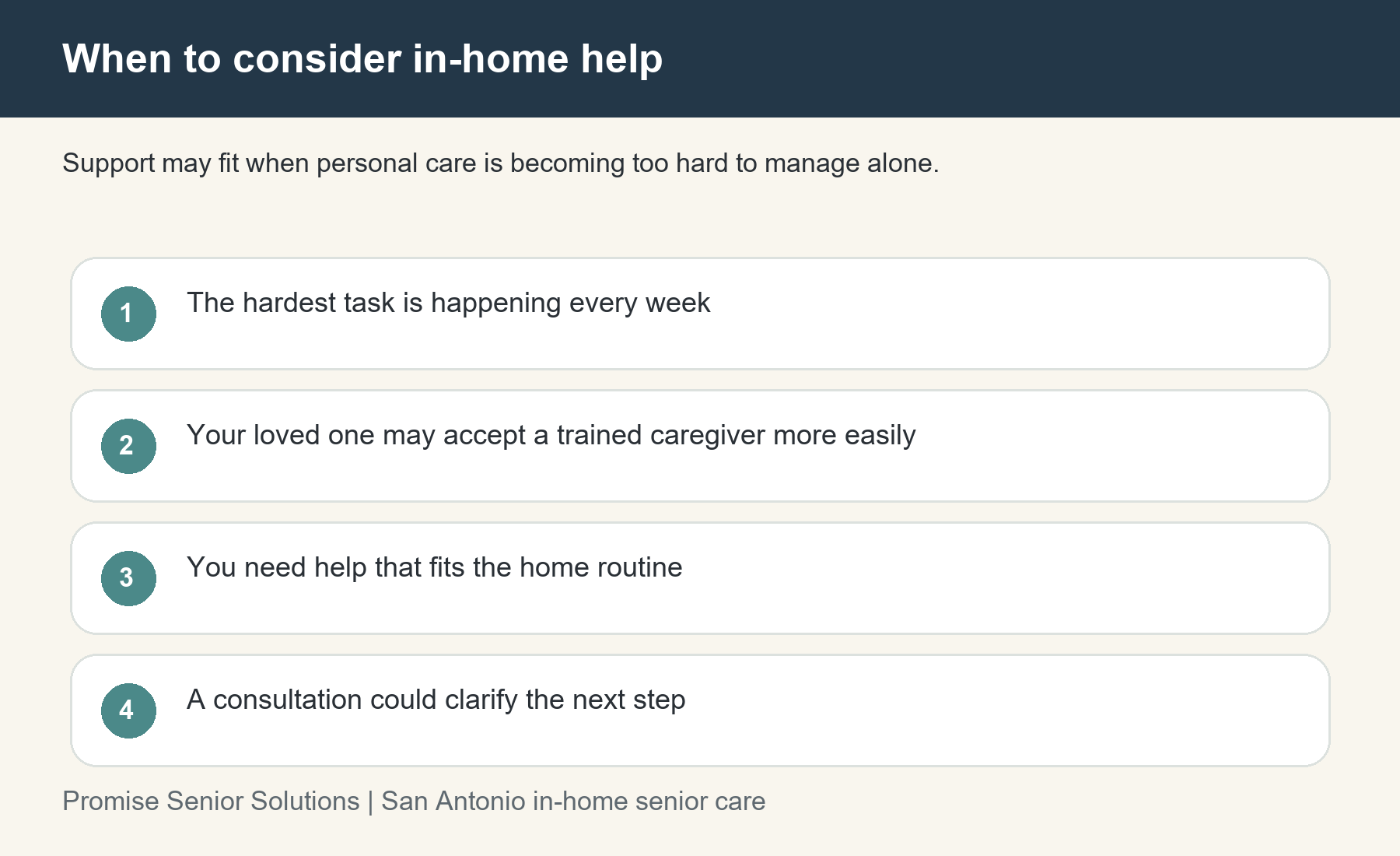
It may be time to consider support when bathing or dressing is regularly skipped, when personal-care routines are causing conflict, when a caregiver is physically or emotionally exhausted, or when the bathroom routine no longer feels safe to manage alone.
You do not have to wait for a crisis. If your loved one wants to remain at home but needs more help with personal care, a free in-home consultation can help your family talk through options with less pressure.
How Promise Senior Solutions can help
Promise Senior Solutions provides in-home senior care in San Antonio and surrounding areas. Bathing & Hygiene Care is designed to offer gentle, respectful help with bathing, showering, dressing, and hygiene routines. Depending on the care plan, families may also discuss companion care, respite care, dementia care, return-to-home care, bed bound care, or transportation support when those services may be a fit in the future.
The focus is simple: help your loved one stay supported at home while protecting dignity and giving the family more clarity about what comes next.
Frequently asked questions
What if my loved one refuses help with bathing?
Start with the reason behind the refusal if you can. The issue may be privacy, fear, confusion, temperature, timing, or embarrassment. A calm conversation and a smaller first step may work better than pressure.
What if they only need help with bathing and nothing else?
Promise provides service visits as short as 1 hour. There are no minimum visits required. So if they need assistance with just one shower a week - they have you covered.
Can hygiene support be part of a larger care plan?
Yes. A family may begin with bathing or dressing support and also discuss other documented services if the loved one needs broader help at home. The right plan depends on the person's needs and the family's goals.
You can ask for help without taking away dignity
Personal care can be one of the hardest parts of caregiving because it touches both safety and pride. If bathing has become tense, it does not mean your family has failed. It may simply mean the routine needs more support, more structure, and a gentler plan.
Hello, World!