What to Put on a Home Care Handoff List
A simple way to keep routines clear when more than one person is helping your loved one at home.
If everyone calls you first, you already know how much invisible caregiving work lives in your head. You may be the one who remembers the lunch routine, the appointment plan, the bathing preference, the front-door lock, the neighbor who checks in, and the small signs that mean your loved one is having an off day.
A home care handoff list helps take those details out of your memory and put them in one clear place. It does not need to be complicated. In fact, the best version is usually one page that another family member, respite caregiver, companion caregiver, or in-home care team can understand quickly.
A home care handoff list should include the daily routine, key contacts, meals and hydration notes, medication reminder instructions, mobility and safety reminders, personal-care preferences, appointment details, and a short section for changes since the last visit. The goal is simple: help the next person provide respectful support without making the family caregiver repeat everything from scratch.
Why a Handoff List Helps Families Feel Less Scattered
Caregiving often becomes stressful because the information is spread across text messages, sticky notes, memory, and last-minute phone calls. One person may know the morning routine. Another may know the transportation plan. Someone else may know that Mom prefers a sweater by the chair or that Dad gets anxious when the day feels rushed.
The CDC encourages caregivers to create and maintain a care plan because written planning can help families manage care responsibilities alongside the rest of life. AARP also encourages families to summarize the caregiving plan in writing and keep it flexible as needs change. For a San Antonio family trying to coordinate support at home, that idea can become very practical: write down the basics before the next rushed moment happens.
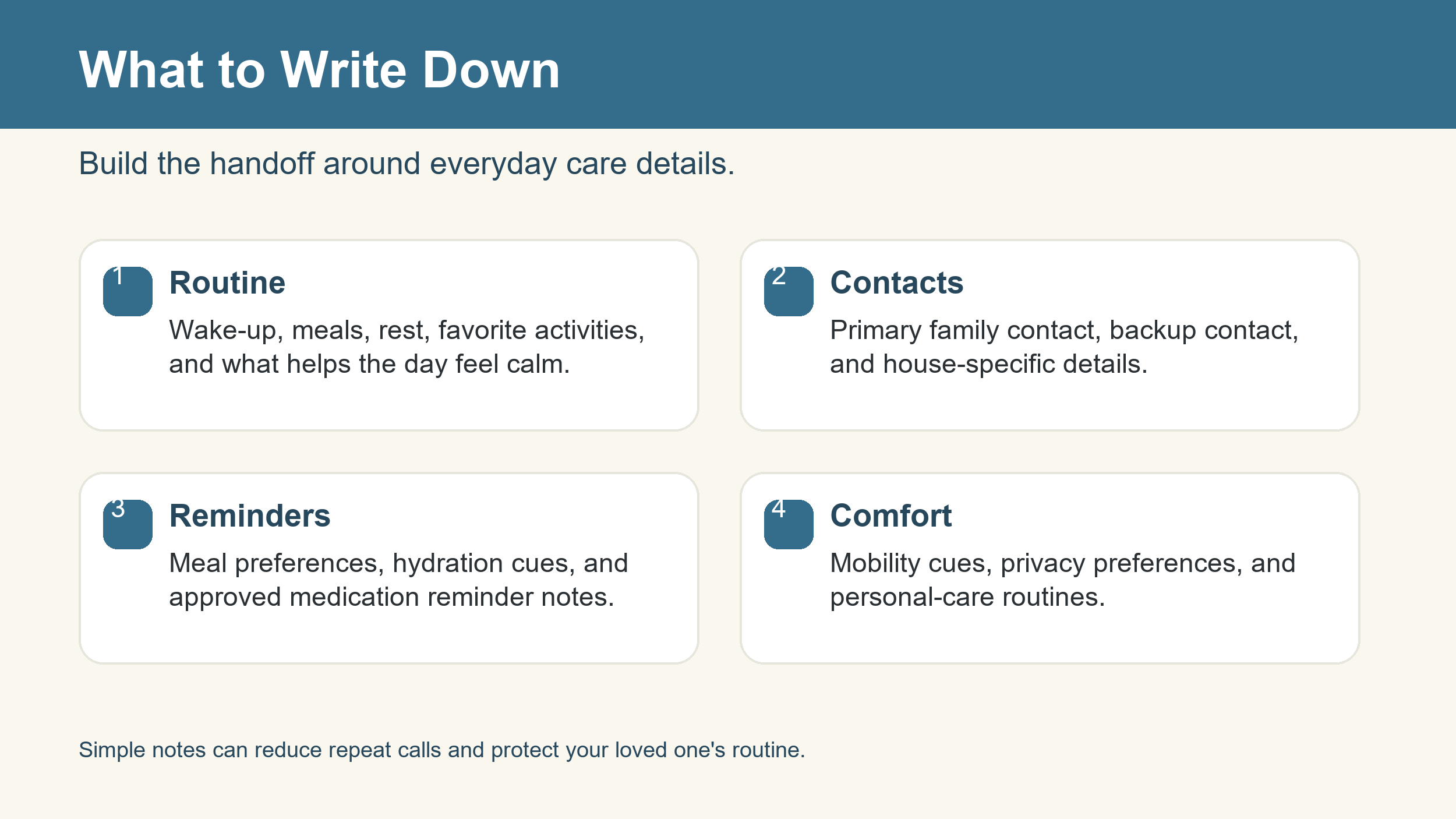
1. Start With the Daily Routine
Begin with what usually happens in a normal day. This is the part most families underestimate because it feels obvious to the person doing it every day.
Usual wake-up and bedtime rhythm
Meal and snack preferences
Favorite chair, blanket, TV program, music, or activity
Best time for bathing, dressing, walks, or quiet rest
What helps your loved one feel calm, respected, and not rushed
Keep this section plain. You are not writing a medical chart. You are giving the next helper enough context to protect dignity and keep the day familiar.
2. Write Down Contacts and Backup Information
A simple contact section can prevent confusion when something changes. Include the primary family contact, a backup family contact, preferred pharmacy or physician contact if appropriate, and any house-specific notes such as gate codes, pet instructions, or where supplies are kept.
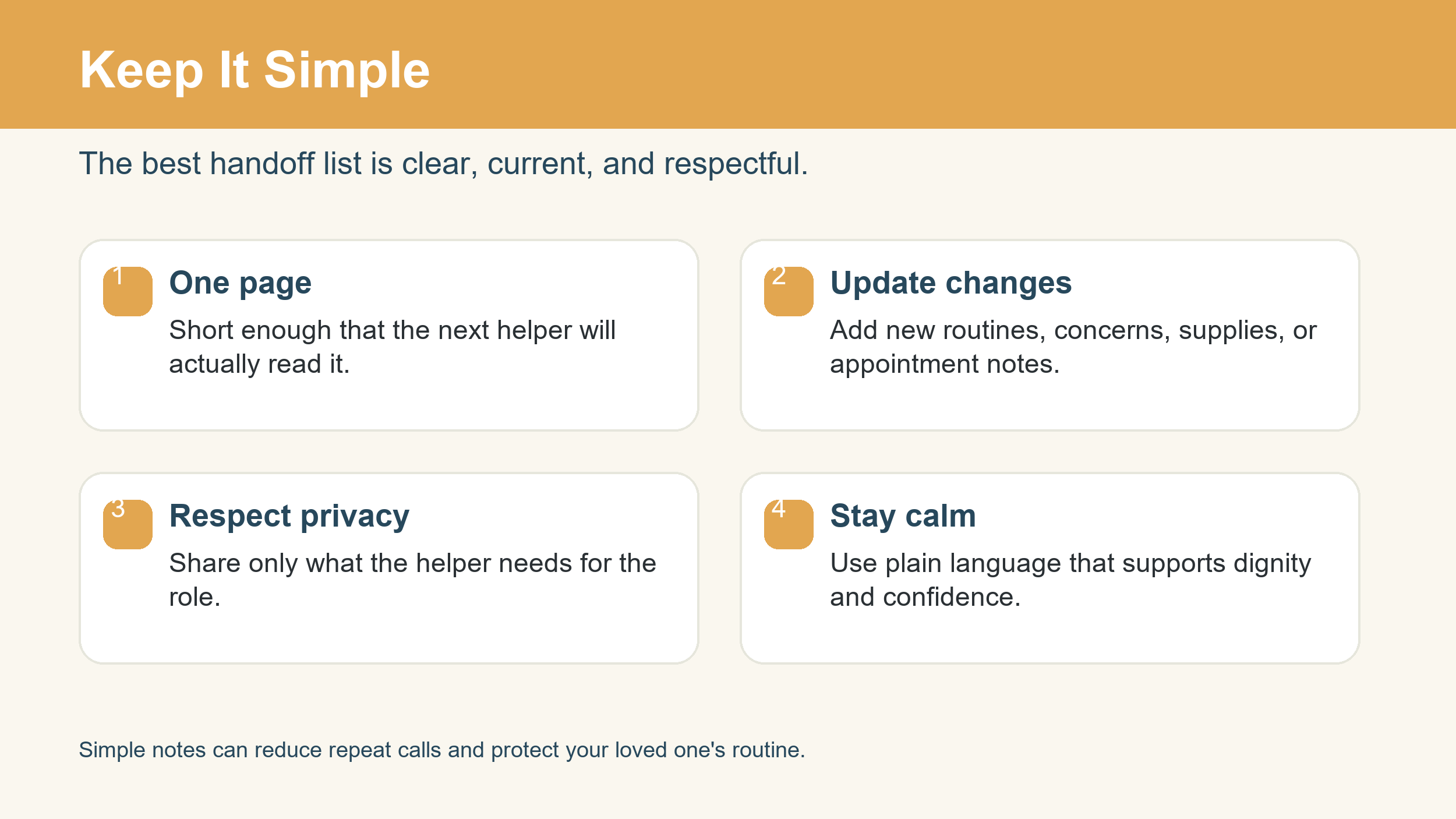
Only include information that the helper truly needs for the role they are filling. If the list will be shared with multiple people, be thoughtful about privacy. Legal, financial, and medical records should not be casually passed around unless the right person has permission to see them.
3. Include Meals, Hydration, and Reminder Notes
Families often notice changes first around meals. Maybe lunch gets skipped. Maybe the refrigerator is full but nothing is getting prepared. Maybe your loved one needs a gentle reminder to drink water or sit down for a snack.
Your handoff list can include favorite easy meals, foods to avoid, where groceries are stored, and what a good meal-support routine looks like. If medication reminders are part of the care arrangement, write the reminder instructions clearly.
4. Add Mobility, Safety, and Home Notes
This section should focus on practical reminders: which entrance is easiest, where the walker is kept, whether rugs tend to shift, which chair is safest for standing up, or whether the bathroom routine needs extra time.
The National Institute on Aging offers home safety guidance for Alzheimer's caregiving that includes paying attention to everyday hazards and making the home easier to navigate. Even when dementia is not the concern, the same general idea is useful: write down the household details that help support a safer, calmer visit.
5. Respect Personal-Care Preferences
Personal care is one of the places where a handoff list can make the biggest difference. Bathing, dressing, grooming, and hygiene support should be handled with patience and respect. A short note about preferences can help your loved one feel less exposed and more in control.
Preferred words for asking about bathing or dressing
Clothing preferences and where clean items are kept
Whether your loved one prefers a female or male caregiver when possible
How much privacy or step-by-step prompting helps
Any routine that usually prevents embarrassment or resistance
These details are not small. They help a caregiver enter the home with more understanding and less guesswork.
6. Leave Room for Changes Since the Last Visit
A handoff list should not become a stale document that no one trusts. Leave a small section at the bottom called "What changed recently?" This can include a new appointment, a change in appetite, a family concern, a new supply location, or a routine that is no longer working well.
When Should You Use a Handoff List?
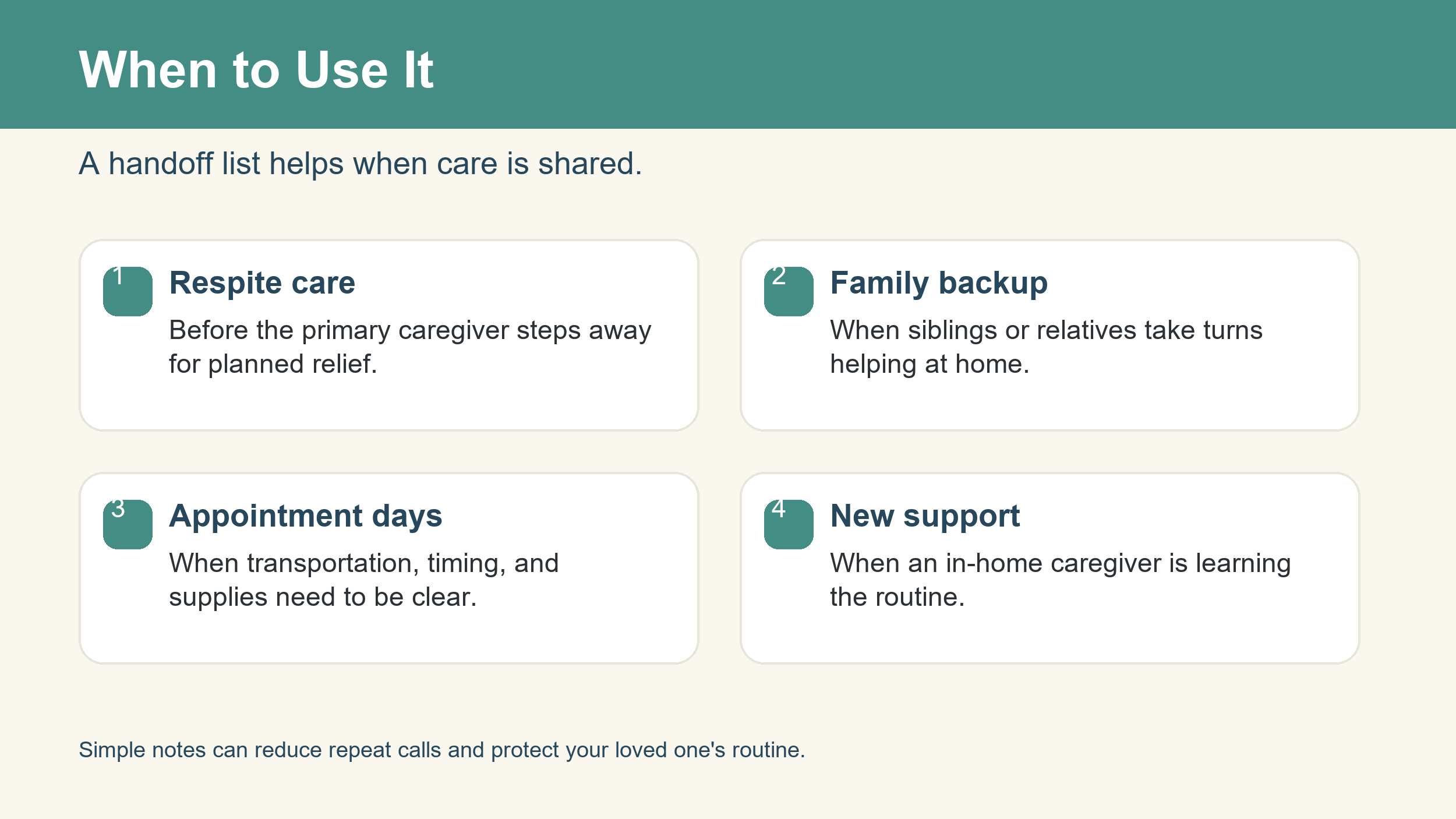
A handoff list is helpful any time more than one person is involved in care. It is especially useful before respite care, after a hospital or rehab return home, when adult children are taking turns, when a new in-home caregiver starts, or when appointment days are starting to feel harder to manage.
For Promise Senior Solutions families in San Antonio, a handoff list can also support the care-plan conversation. It gives you a clear starting point for explaining what is happening at home and where support may be needed.
A Simple One-Page Handoff Format
If you are starting from scratch, use this structure:
Top: loved one's name, address, primary contact, backup contact
Middle: daily routine, meals, reminders, mobility notes, personal-care preferences
Bottom: appointment notes, supply locations, recent changes, questions for the family
Keep it short enough that someone will actually read it. Update it when something changes. Print one copy for the home and keep a digital copy for the family if that fits your situation.
How Promise Senior Solutions Can Help
Promise Senior Solutions provides in-home senior care in San Antonio and surrounding areas, including companion care, respite care, bathing and hygiene support, dementia care, return-to-home care, bed bound care, and transportation support. Care is built around a personalized plan, so the conversation starts with what your loved one actually needs at home.
If you are carrying every detail alone, asking for help does not mean you failed. It may simply mean the routine has outgrown one person's memory and energy.
FAQ
How long should a home care handoff list be?
One page is usually enough for the everyday basics. If the situation is more complex, keep the quick handoff list short and store longer documents separately.
Should the list include medication information?
It can include reminder instructions if medication reminders are part of the care arrangement.
Can a handoff list help with respite care?
Yes. A clear handoff list can make respite coverage feel easier because the substitute caregiver or family helper can understand the routine before the primary caregiver steps away.
Getting Started Is Easier Than You Think
You do not have to create the perfect document tonight. Start with the three things you repeat most often. Add the routine details that protect your loved one's comfort and dignity. Then bring that list into your next care conversation.
If your family is ready to talk through in-home support, Promise Senior Solutions can help you take the next step with a free, no-obligation consultation. The goal is not to take over your role. It is to help your loved one receive thoughtful support at home while you carry less of the invisible load alone.