How to Plan the Whole Appointment Outing for an Older Loved One
A practical guide for San Antonio families who want appointment days to feel calmer from the front door to the return home.
If you help a parent, spouse, or older loved one get to appointments, you already know the ride is only one part of the day. The harder parts often happen before and after the car: finding paperwork, getting dressed, walking safely to the door, waiting without feeling rushed, remembering follow-up instructions, and settling back in at home.
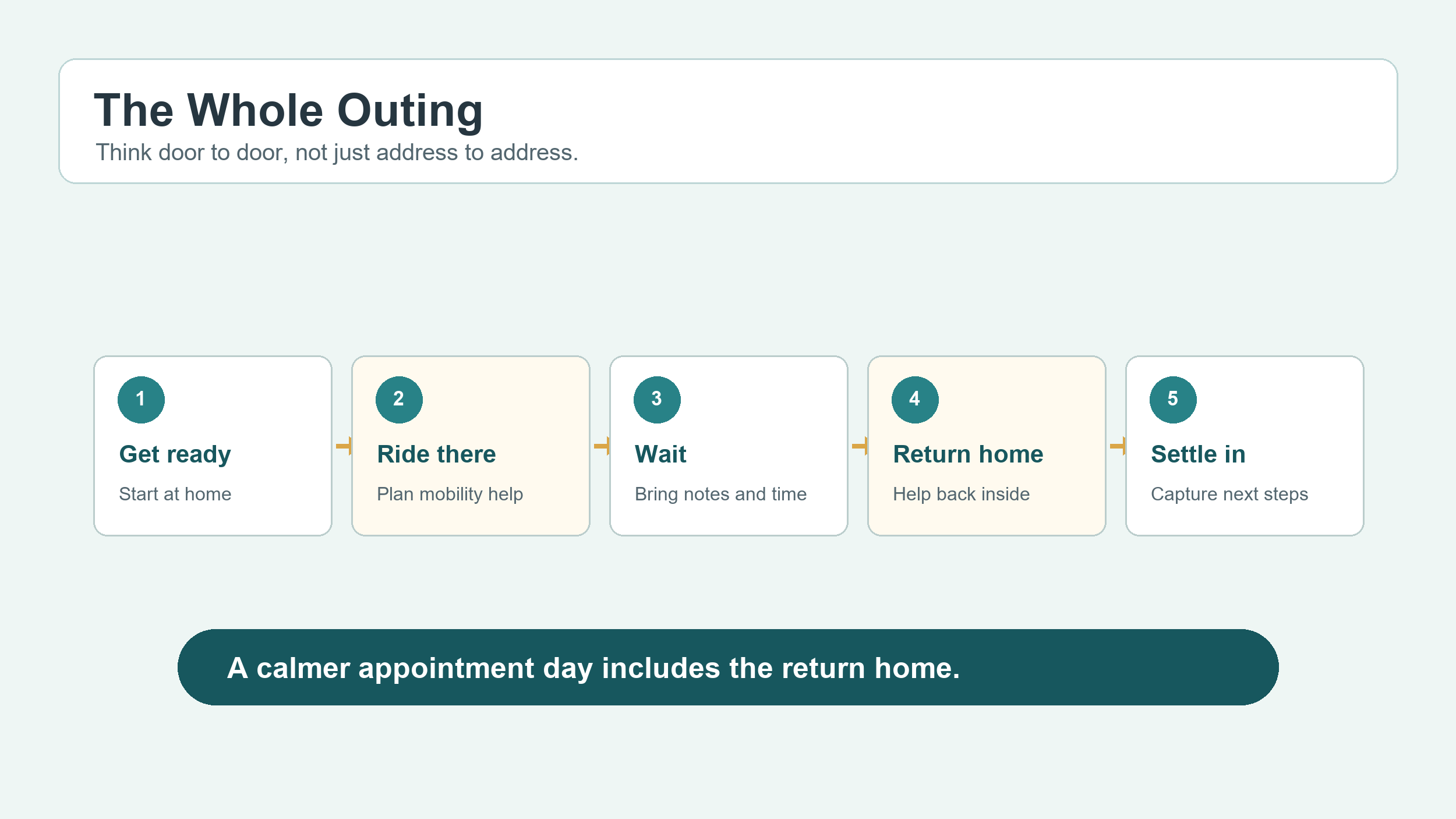
That is why appointment support should be planned as a whole outing, not just a pickup time. A calm appointment day starts with the home routine and ends when your loved one is comfortably back inside.
The goal is not to make the day complicated. It is to notice the small steps that can make the day feel more manageable for your loved one and for the family caregiver carrying the details.
What Does It Mean to Plan the Whole Appointment Outing?
Planning the whole appointment outing means thinking through the full door-to-door routine: preparation at home, the ride there, help getting in and out, waiting time, the appointment itself, the ride home, and the small after-appointment tasks that help the day settle again.
This is especially helpful when your loved one moves slowly, gets tired easily, feels anxious about appointments, has memory changes, or needs someone steady nearby. It can also help family caregivers who are juggling work, siblings, traffic, errands, and follow-up calls.
1. Start the Plan Before the Ride
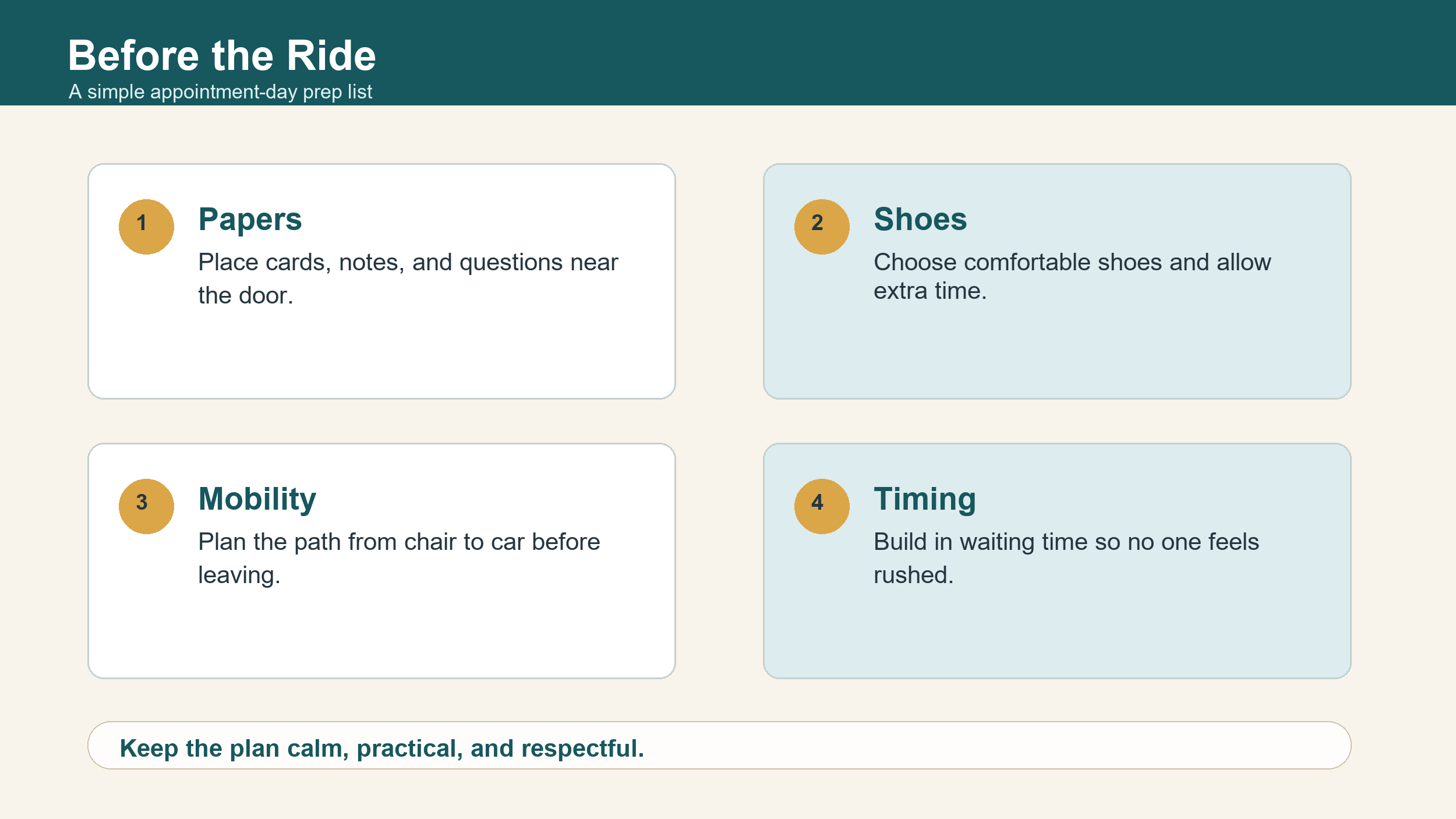
Many appointment days become stressful because the family plans the appointment time but not the hour before it. That hour can include bathing, dressing, shoes, a jacket, glasses, hearing aids, paperwork, insurance cards, medication lists, snacks, water, mobility devices, and enough extra time to avoid rushing.
Before the appointment day, ask a few simple questions:
What time do we need to start getting ready?
What papers, cards, or notes should be near the door?
Does your loved one need help walking from the home to the car?
Is there a step, threshold, driveway, or hallway that usually slows things down?
Who will stay aware of the schedule if the morning runs behind?
MedlinePlus notes that caregivers and loved ones can plan ahead for medical appointments together, including talking about concerns, deciding how involved the caregiver will be, and bringing a written list of priorities. That same idea applies at home before the outing begins.
2. Think About the Door-to-Door Details
Transportation support is not only about getting from one address to another. For many older adults, the most tiring moments are getting to the vehicle, stepping in and out, walking into the office, and returning to the car afterward.
A practical appointment plan should include:
how your loved one will get from the chair to the door
whether a cane, walker, wheelchair, or steady arm is needed
where the driver can park for the easiest entry
how much walking is required at the appointment location
who will help with doors, bags, paperwork, and check-in
For San Antonio families, this is where escorted transportation may be worth discussing. Promise Senior Solutions describes escorted transportation as door-to-door help with mobility assistance and support for appointments and errands. That can be different from simply arranging a ride.
3. Plan for Waiting Time, Not Just Arrival Time
Appointment days often include waiting. The office may run behind. Forms may take longer than expected. Your loved one may need the restroom, a drink of water, or a quiet moment before going in.
Planning for waiting time is a simple way to reduce pressure. Pack what helps the outing feel steady: a written question list, a sweater, glasses, hearing aids, snacks if appropriate, water if allowed, and a small notebook for follow-up instructions.
The National Institute on Aging offers appointment resources and worksheets that can help families organize questions and medical information before a visit.
4. Do Not Forget the Return Home
The ride home can matter just as much as the ride there. After an appointment, your loved one may be tired, hungry, or ready to sit down. The family caregiver may also be trying to remember instructions, schedule a follow-up, pick up a prescription, call a sibling, or get back to work.
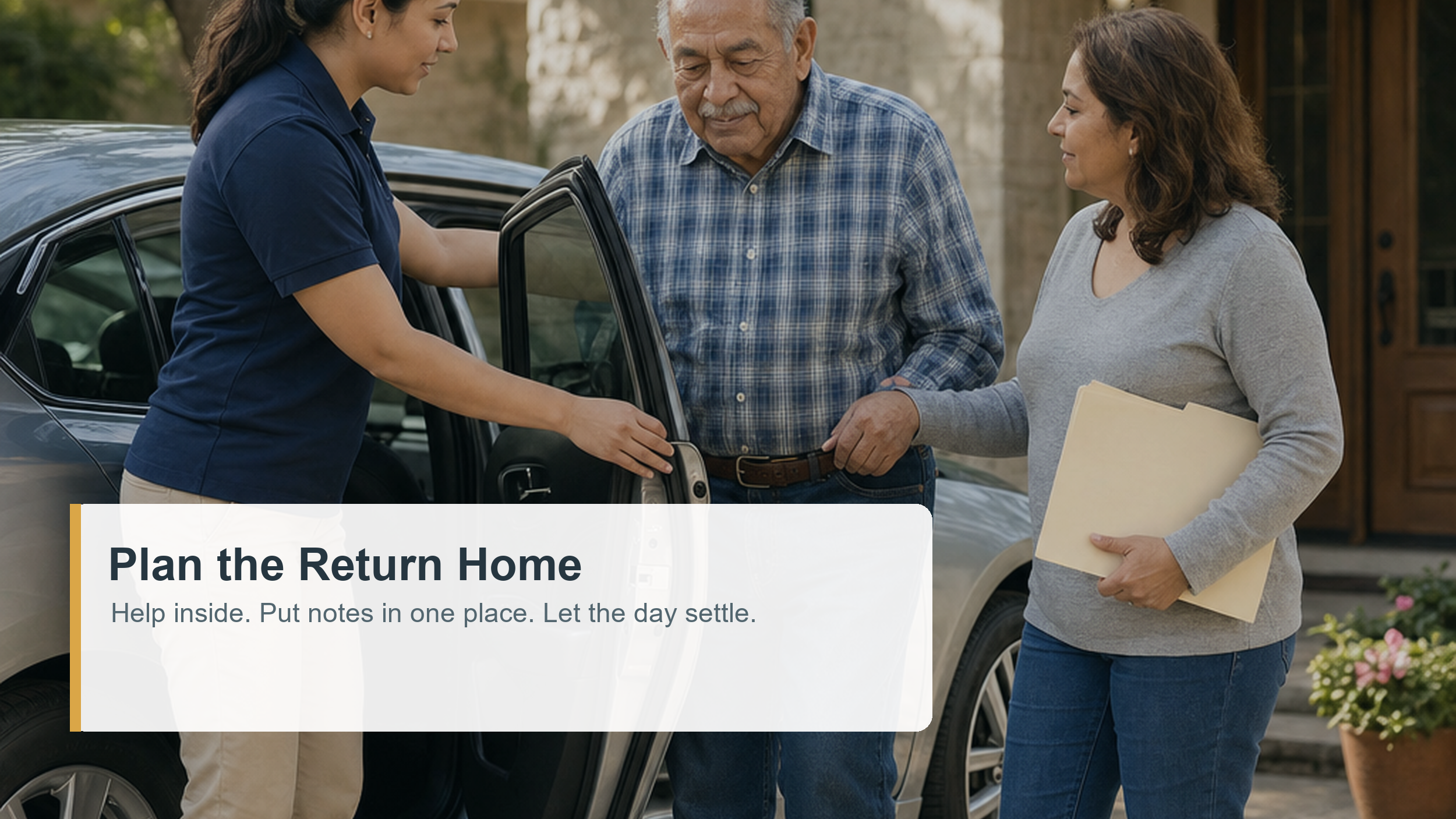
A return-home plan can include:
help getting from the car back into the home
putting bags, papers, and appointment notes in one place
checking whether a simple meal, drink, or rest is needed
writing down next steps while they are still fresh
making sure the home routine feels settled before leaving
This is where transportation and in-home support can work together. Some families need the ride. Some need someone to stay through the appointment. Some need help after the outing so the day does not fall apart once everyone gets home.
5. Watch for Safety and Comfort Without Creating Fear
Appointment outings can reveal small changes at home. Maybe the front step is getting harder. Maybe the hallway is cluttered. Maybe your loved one is steady in the morning but worn out by the afternoon.
The CDC STEADI patient and caregiver resources are a useful reminder that fall-prevention conversations can include practical home-safety awareness. Families do not need to turn every outing into a warning sign, but they can pay attention to what makes the day harder.
A calm question can help: "What part of this outing felt hardest today?" The answer may point to a simple next step, such as more time to get ready, steadier help at the door, a different appointment time, or escorted support.
When Should a Family Consider Appointment-Day Support?
Consider support when appointment days keep becoming stressful, when one caregiver is carrying every detail alone, or when your loved one wants to keep going to appointments but needs more help around the outing.
Support can start small. A family might begin with transportation for one recurring appointment, escorted support when walking and waiting are concerns, or in-home care help before or after the outing. The right starting point depends on the person, the home, and the family schedule.
FAQ
Is escorted transportation the same as emergency medical transportation?
No. Escorted transportation is non-emergency support for appointments, errands, and outings. It should not be used in place of emergency medical transport or medical care.
What should we have ready before an appointment outing?
Start with the basics: appointment time, address, paperwork, ID or cards, glasses, hearing aids, mobility device, comfortable shoes, a medication list when needed, questions for the provider, and enough time to leave without rushing.
Can in-home care help before or after the ride?
Depending on the care plan, in-home support may help with getting ready, light household tasks, companionship, reminders, or settling back in after the outing. A consultation can help clarify what support may fit.
A Calmer Appointment Day Starts With a Fuller Plan
Planning the whole appointment outing is not about overthinking the day. It is about respecting how many small steps are involved when an older loved one leaves home and comes back again.
If appointment days are starting to feel harder for your family, Promise Senior Solutions can help you talk through practical options. A free, no-obligation consultation can look at the routine, the home, and the support that may make transportation and appointment days feel more manageable.