The First In-Home Care Conversation Should Start With Listening
A calm way for San Antonio families to talk about support before decisions feel too big.
If you are thinking about in-home care for a parent, spouse, or loved one, the first conversation can feel heavier than expected. You may know something has changed. The routine is harder. Appointments take more energy. The house feels less manageable. Your loved one may still say, "I am fine," even when you can see that daily life is taking more effort.
That is why the first conversation should not begin with a decision already made. It should begin with listening. Before you talk about schedules, services, or who is going to help, take time to understand what your loved one wants to protect, what feels frustrating, and what kind of support might feel respectful instead of intrusive.
Promise Senior Solutions helps San Antonio families think through in-home support with a free, no-obligation consultation and a personalized care-plan approach. But even before that consultation, families can take one helpful step: slow the conversation down and listen for the routine behind the need.
What Should the First In-Home Care Conversation Include?
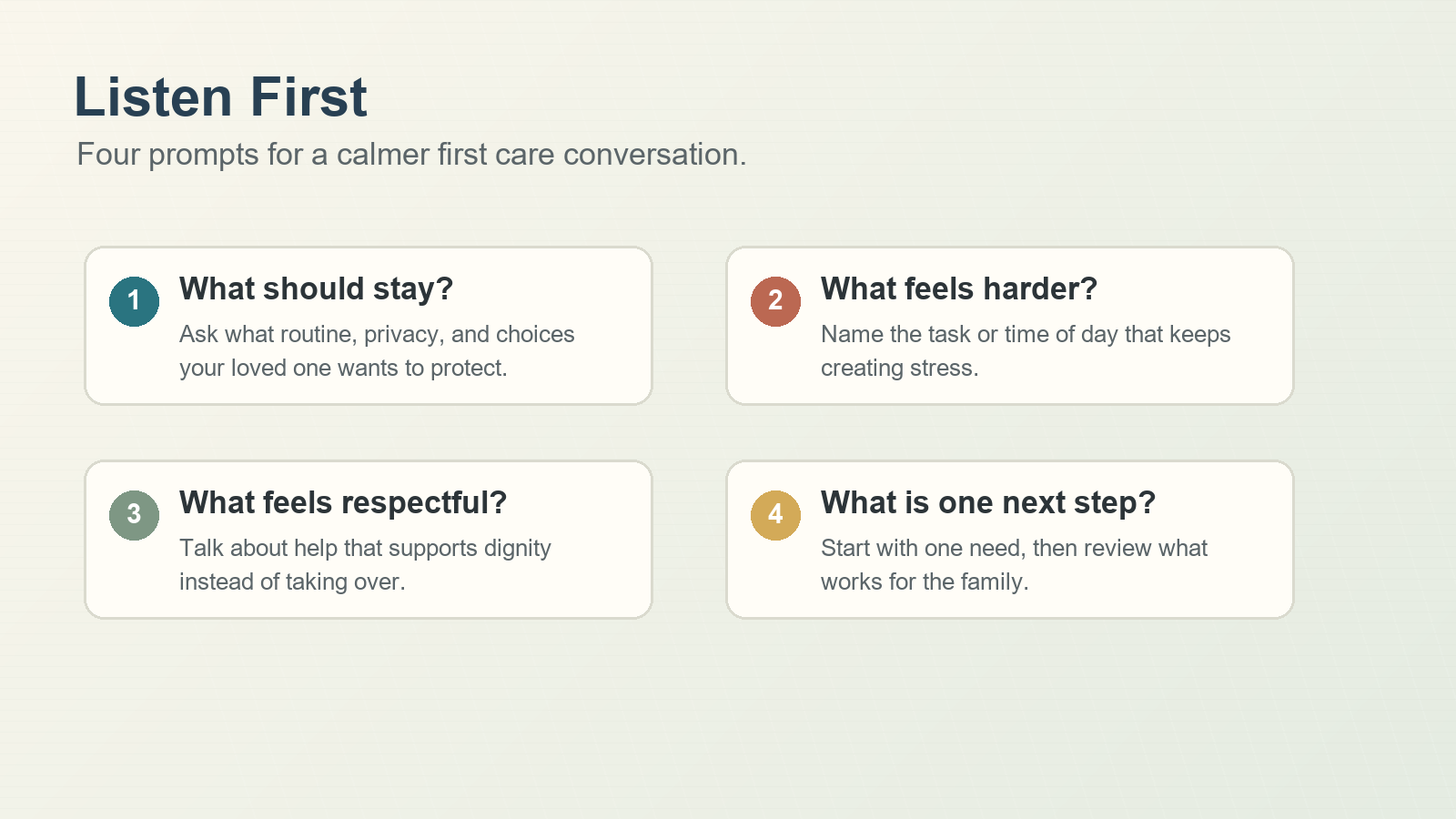
The first in-home care conversation should include your loved one's preferences, daily routine, concerns, and comfort level with help. Start by asking what parts of the day feel easiest, what feels harder lately, and what kind of support would feel acceptable. That gives the family a clearer starting point without making the conversation feel like a loss of control.
1. Listen for What Your Loved One Wants to Keep
Many older adults are not only reacting to the idea of help. They are reacting to what they fear help might mean. They may worry about losing privacy, independence, or control over the rhythm of their day.
A better first question is not, "Do you need care?" It is something more human:
What part of your day do you still want to do your own way?
What routine matters most to you?
What kind of help would feel comfortable?
What would you not want changed?
The National Institute on Aging encourages keeping older adults involved in their own care conversations. That principle matters at home, too. When your loved one is part of the discussion, support can feel more like partnership and less like a decision made around them.
2. Notice the Routine Before Naming the Service
Families often try to solve the whole care question at once. That can make everyone feel overwhelmed. Instead, look at the daily pattern that prompted the concern.
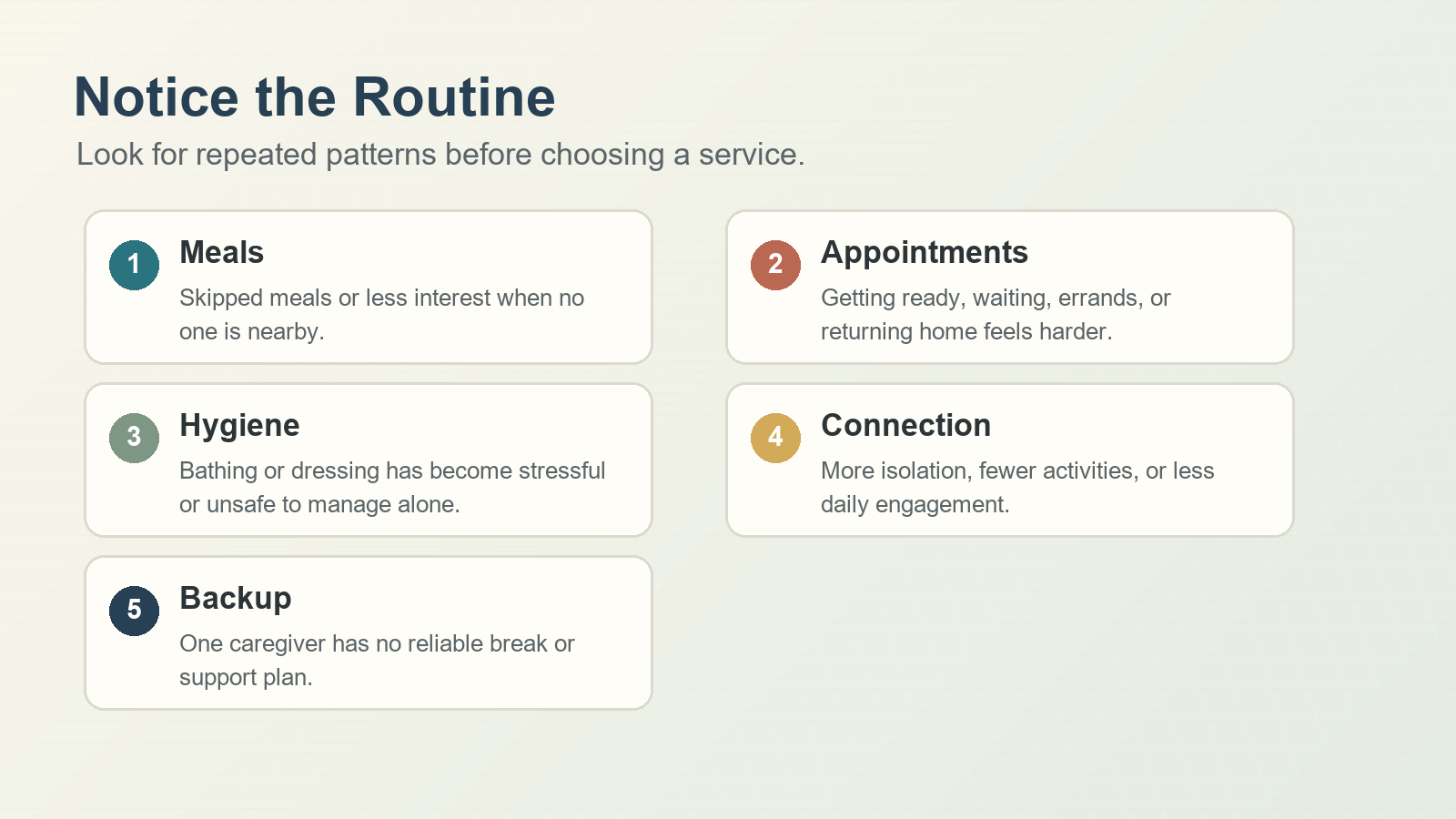
Maybe mornings are harder. Maybe bathing and dressing are becoming stressful. Maybe meals are skipped, laundry piles up, or appointment days leave everyone exhausted. Maybe your loved one is safe most of the time, but certain moments keep creating worry.
Write down what you are seeing in plain language. For example:
Getting ready for appointments takes longer than it used to.
Mom seems less interested in meals when no one is there.
Dad gets frustrated when the evening routine changes.
The family caregiver has no reliable backup for errands or rest.
This helps the conversation stay practical. You are not labeling your loved one as unable. You are naming the part of life that may need backup.
3. Ask What Help Would Feel Respectful
Respectful support starts with the person receiving it. Some people are open to transportation help but hesitant about personal care. Some are comfortable with companionship but not ready for help with bathing or hygiene. Some family caregivers need respite care, but they worry their loved one will feel abandoned.
The goal is not to force agreement in one sitting. The goal is to find the first acceptable step.
You might say, "I do not want to take over. I want to understand what would make the week easier and still feel like your home." That kind of sentence lowers the pressure. It shows that the conversation is about support, not control.
4. Connect the Conversation to Real Support Options
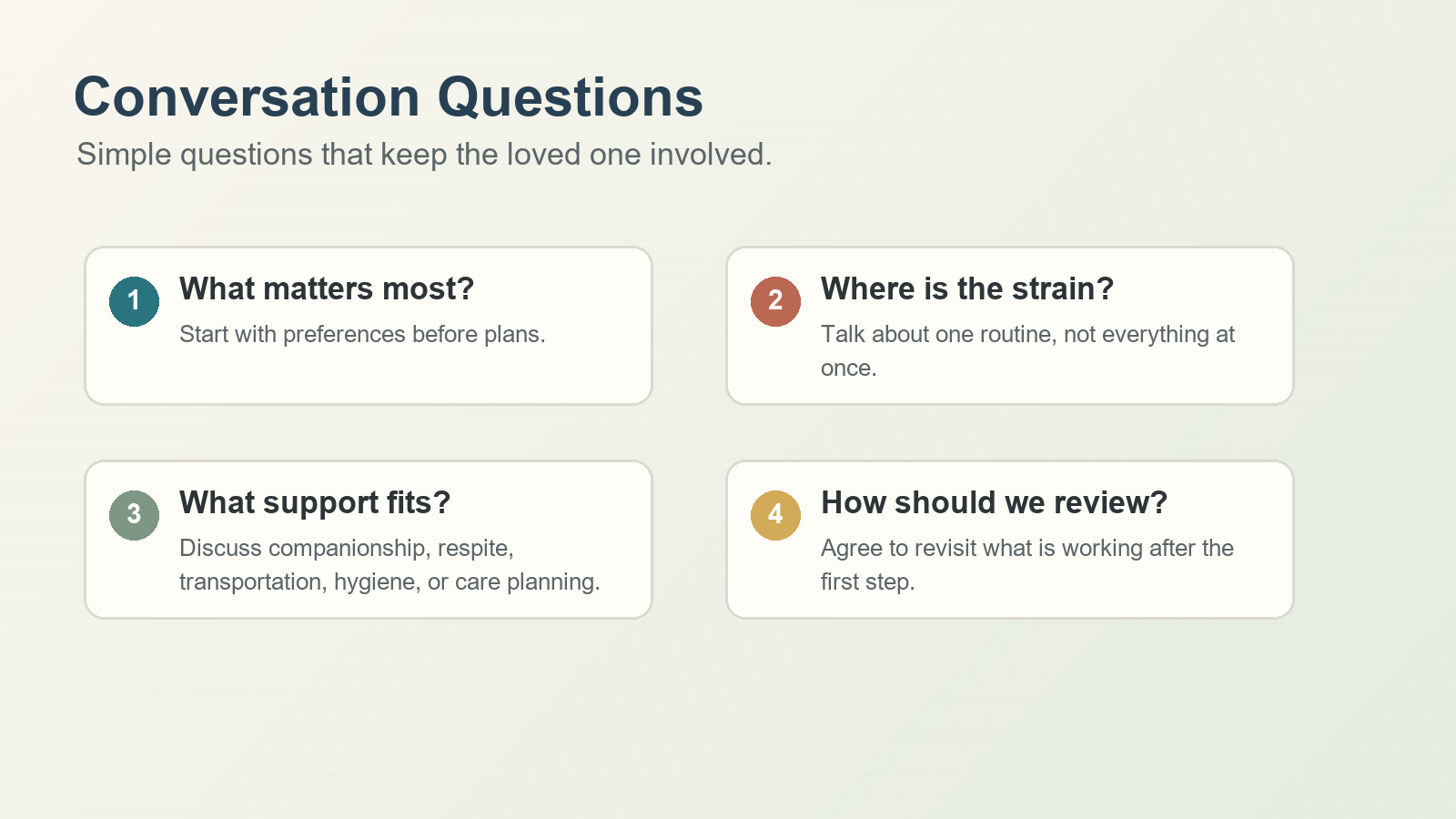
Once the family understands the routine, it becomes easier to talk about what kind of in-home support may fit.
Different situations may call for different kinds of help:
Companion care may fit when a loved one needs conversation, shared activities, light support, reminders, or regular check-ins.
Respite care may help when the family caregiver needs planned relief and reliable backup.
Bathing and hygiene care may help when personal care has become physically or emotionally difficult for the family to manage alone.
Transportation or escorted transportation may help when appointment days are stressful before, during, or after the outing.
Dementia care may fit when familiar routines, calm communication, and trained caregiver support are important.
The right starting point depends on the person, the home, and the family. That is why a personalized care-plan conversation matters.
5. Use the Home Itself as Part of the Conversation
A calm conversation can also include what is happening around the home. Are there rooms your loved one avoids? Is the bathroom becoming harder to manage? Are hallways cluttered? Is the kitchen routine changing?
The CDC's STEADI resources include home safety materials for older adults and caregivers. Families do not need to turn the first conversation into a safety inspection, but noticing the home environment can make the next step more concrete. You can say, "Let us look at what would make this one part of the day easier."
When Should a Family Consider In-Home Support?
Consider support when the same concern keeps repeating, one caregiver is carrying too much alone, or your loved one wants to stay at home but the current routine is becoming harder to maintain.
That does not mean everything has to change at once. Many families start with one need: a ride, a few hours of companionship, help after an appointment, bathing support, or scheduled respite for the family caregiver. Starting small can make the conversation feel more manageable.
FAQ
What if my loved one refuses to talk about care?
Start with listening instead of convincing. Ask what they want to keep the same and what part of the week feels most frustrating. If the conversation gets tense, pause and return to one practical concern later.
Does in-home care mean our family is stepping away?
No. In-home care can work alongside family involvement. Families still guide preferences, routines, decisions, and what matters most to their loved one.
Can we begin with just one type of support?
Yes. A consultation can help your family talk through what level of support may fit. The first step may be companionship, respite care, transportation, bathing and hygiene support, or broader in-home care depending on the situation.
A Good First Step Is a Better Conversation
Asking about in-home care does not have to begin with pressure. It can begin with a quiet conversation at the kitchen table, a few notes about the routine, and a sincere effort to understand what your loved one wants to protect.
If your family is starting to wonder what kind of help may fit, Promise Senior Solutions can talk through options with you. A free, no-obligation consultation can help you look at the home, the routine, and the support that may make daily life feel more manageable.