Start With One Care Task: A Practical Way to Ask for Help at Home
When you are helping an older loved one at home, it can be hard to know when support is truly needed. Many families wait for a big change before they ask for help. But often, the need shows up in a quieter way: the same task keeps landing on one person, week after week.
A practical place to start is not the whole care plan. It is one care task.
For many San Antonio families, that one task might be meal preparation, a reminder routine, light housekeeping, transportation to an appointment, bathing and hygiene support, or simply making sure someone has company and a familiar check-in during the week. Naming one repeated task can make the conversation less overwhelming and easier to act on.
Promise Senior Solutions provides in-home senior care and specialty support for families in San Antonio and surrounding areas. Through a personalized care-plan approach and a free, no-obligation consultation, families can talk through what is happening at home and what type of support may fit.
What Does It Mean to Pick One Care Task?
Picking one care task means choosing one recurring part of the week that has become harder to manage alone.
It does not mean your family is giving up control. It does not mean every routine has to change. It simply gives the conversation a clear starting point.
Instead of saying, "We need help with everything," a family might say:
Mornings are becoming rushed.
Appointment days are taking more planning than before.
Meals are not as consistent as they used to be.
Bathing or dressing has become stressful.
One caregiver has no reliable break in the week.
That kind of clarity helps everyone talk about real life, not just a general feeling that things are getting harder.
Why Starting Small Can Help the Conversation
Care decisions can feel emotional. An older parent may worry that help at home means losing independence. An adult child may worry that bringing it up will sound critical. A spouse may feel protective of the routine they have been carrying for a long time.
Starting with one task can make the conversation calmer.
It keeps the focus on support, not blame. It also gives the family something practical to discuss. The question becomes, "What part of the week needs backup?" rather than, "Are things bad enough yet?"
Here are a few examples:
If meals are the concern, the conversation can focus on meal prep support and gentle routine reminders.
If appointment days are the concern, the conversation can focus on transportation or escorted transportation.
If the caregiver needs time away, the conversation can focus on planned respite care.
If personal care has become tense, the conversation can focus on respectful bathing and hygiene support.
If your loved one is lonely or less engaged, the conversation can focus on companion care.
Each of these is a specific starting point. A care plan can be built around what is actually happening at home.
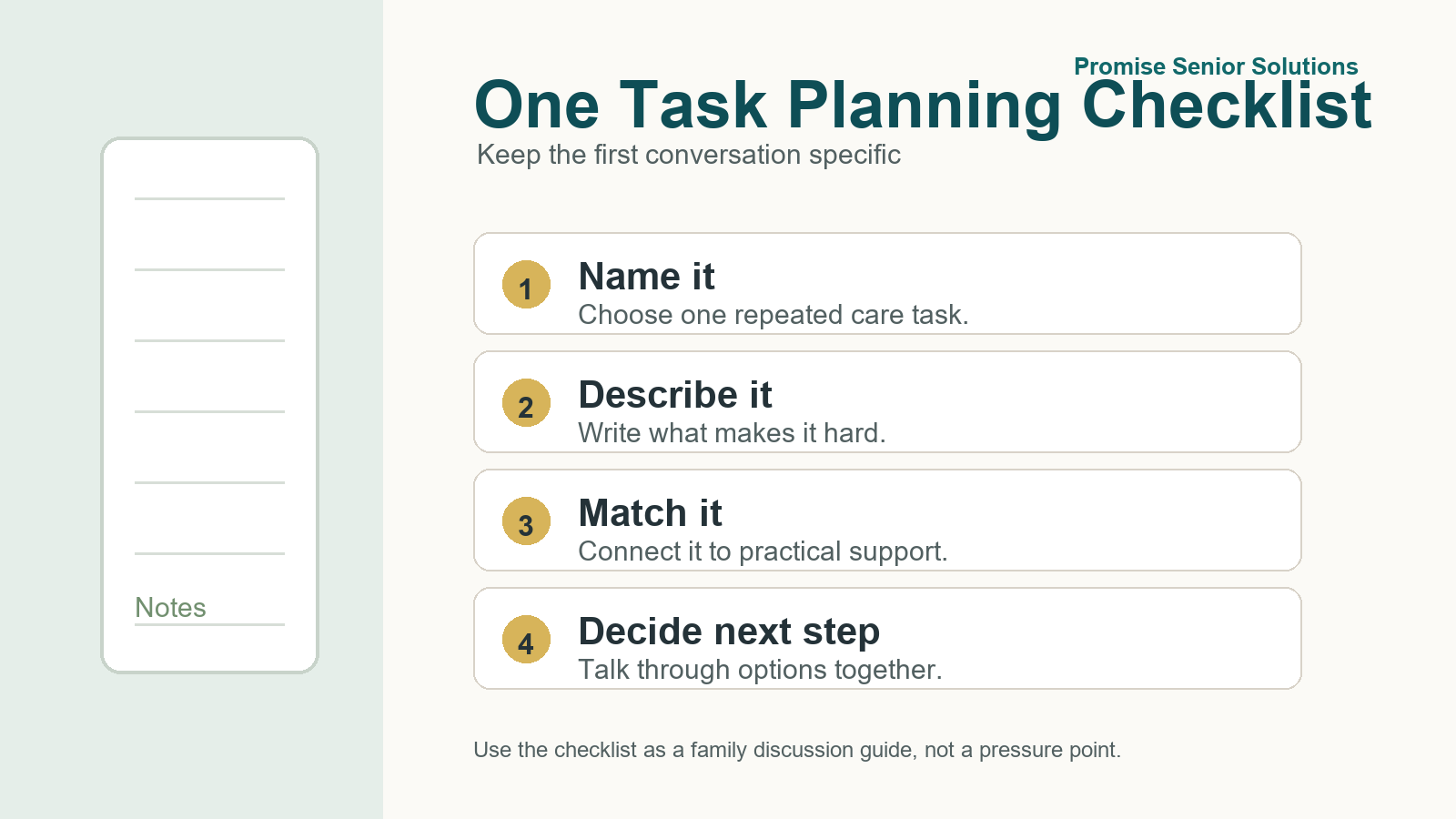
Name the Task That Keeps Repeating
Look for the task that keeps coming back, even when everyone is trying their best.
It may be something small on paper but heavy in real life. Maybe the laundry has become a weekly strain. Maybe medication reminders require more attention. Maybe one family member is always adjusting work, appointments, meals, and errands around the same care need.
A simple way to name it is:
"The part of the week that needs the most backup right now is __________."
That sentence can help the family move from worry to a concrete next step.
Write Down What Makes It Hard
Once the task is named, write down what is making it harder.
Is it the time of day? Is it a mobility concern? Is it privacy? Is it transportation? Is it the number of steps involved? Is it the fact that one person is carrying the task without a backup plan?
This does not need to be formal. A short list is enough.
For example:
Morning routine takes longer than expected.
Appointment days require help getting ready and getting out the door.
Meals are being skipped or delayed.
Bathing support needs to be handled with more privacy and dignity.
The caregiver needs a scheduled break but worries the routine will be disrupted.
These details can make a consultation more useful. They also help the family avoid vague labels like "too much" or "not enough help."
Decide What Good Support Should Respect
Before choosing care, it helps to ask what should stay familiar.
For many older adults, comfort comes from ordinary details: the usual chair, the normal mealtime, the preferred way to fold towels, the route to a favorite appointment, or the way a reminder is offered. Support at home should be planned around the person, not just around the task.
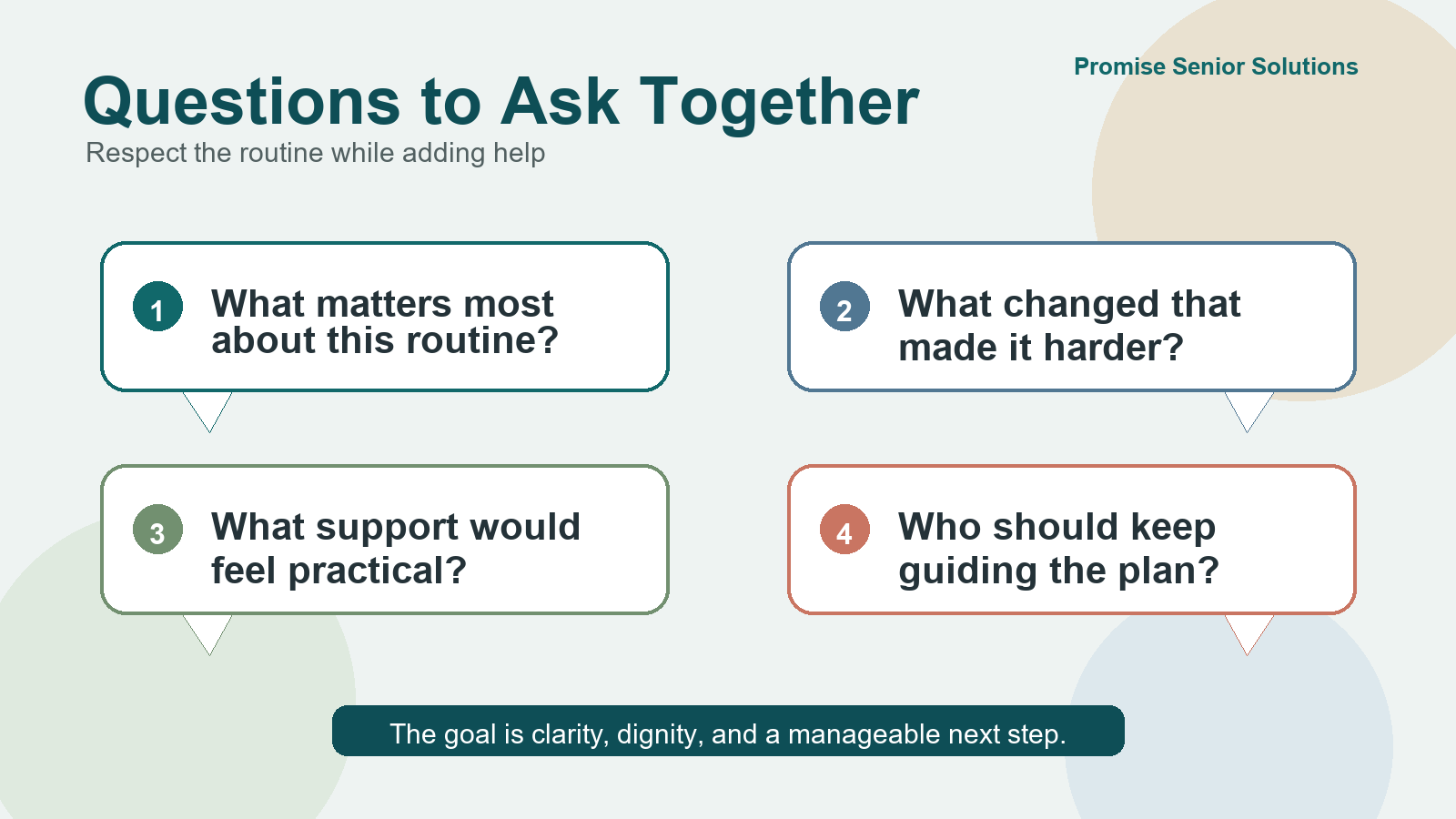
Families can ask:
What routine matters most to our loved one?
What privacy or dignity concerns should be protected?
What does our loved one still want to do independently?
What information should a caregiver know before stepping in?
What would help the family caregiver feel less alone with this task?
These questions keep the conversation respectful.
Talk Through the Right Type of Help
Once the task is clear, the next step is matching the task to the right type of support.
In-home care can support daily routines at home through a personalized care plan. Companion care can help with conversation, shared activities, meal prep support, gentle reminders, light housekeeping, laundry, and check-ins. Respite care can give a family caregiver planned relief while familiar routines continue. Bathing and hygiene care can offer gentle, respectful help with bathing and dressing routines. Transportation support can help older adults get to appointments or errands with the level of assistance that fits the situation.
The goal is not to make a rushed decision. The goal is to understand the options clearly enough to take the next step.
When Should You Consider Asking for Help?
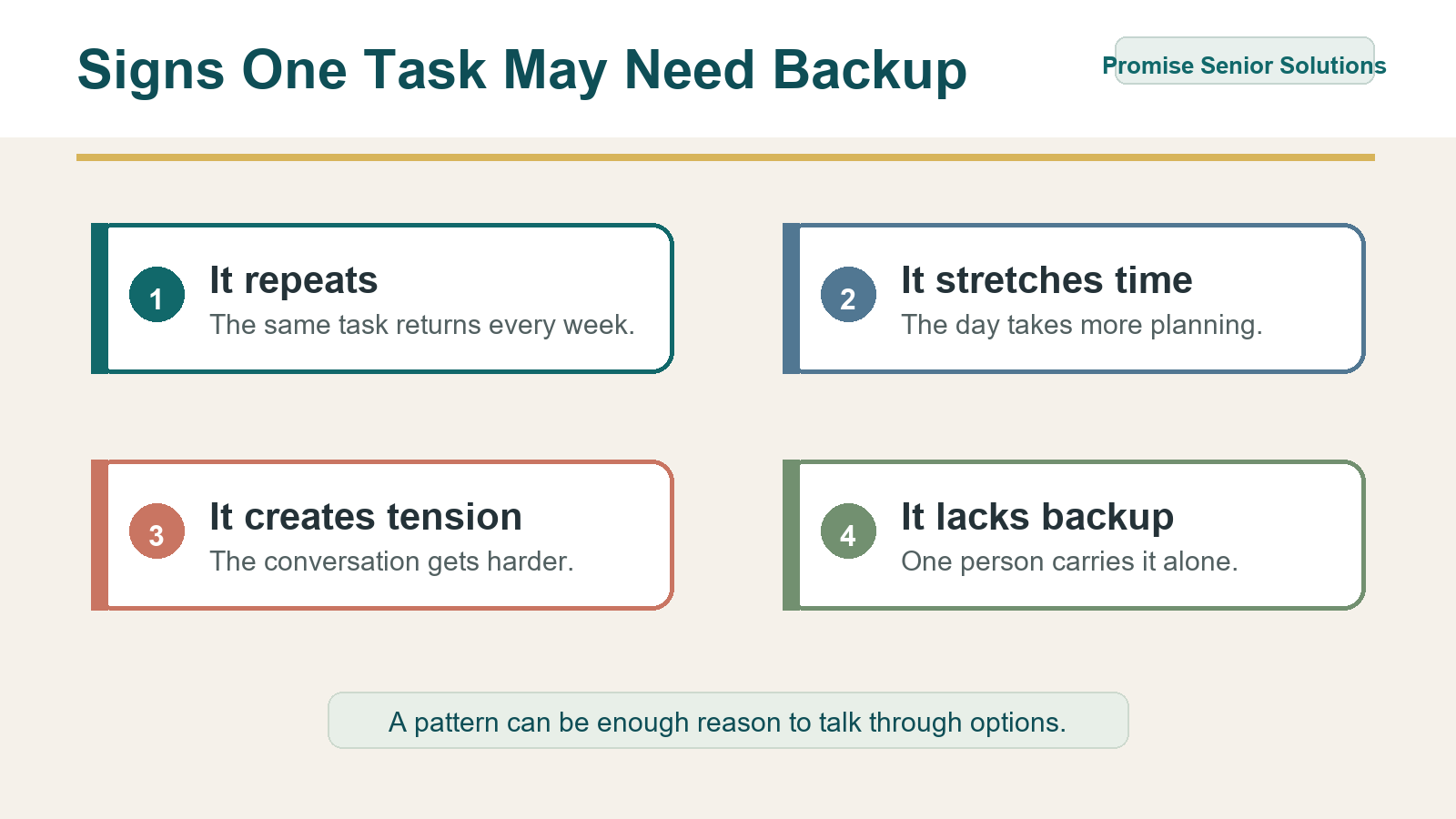
You may want to start a conversation about support when one task is:
taking longer than it used to
creating tension between family members
causing one caregiver to rearrange life again and again
making your loved one less comfortable at home
hard to cover when the main caregiver is sick, working, or unavailable
connected to privacy, dignity, mobility, meals, reminders, or appointments
Families in San Antonio often carry care quietly. They work around appointments, meals, errands, personal care, and changing routines because they love the person they are helping.
But love does not mean one person has to carry every task alone.
Frequently Asked Questions
What is the best care task to start with?
Start with the task that repeats most often or causes the most strain. It may be meals, transportation, reminders, bathing and hygiene, light household support, companionship, or planned caregiver relief.
Does asking for help mean our family is stepping back?
No. In-home support can be planned around family involvement. Families still guide preferences, routines, decisions, and what matters most to their loved one.
Can we start with a small amount of support?
A consultation can help your family discuss what level of support may fit. Promise Senior Solutions uses a personalized care-plan approach, so the conversation can begin with the specific routine or task that needs backup.
Getting Started Is Easier When the First Step Is Clear
If your family is not sure where to begin, begin with one task.
Write it down. Talk about what makes it hard. Ask what should stay familiar. Then have a calm conversation about what kind of support may help at home.
Promise Senior Solutions is available to talk with San Antonio families about in-home care, companion care, respite care, transportation, bathing and hygiene care, and other specialty support options. A free, no-obligation consultation can help you understand what may fit your loved one's routine.