What a Short Companion-Care Visit Can Help With at Home
Companion Care
A practical guide for families who are noticing quieter days, skipped routines, or a loved one who could use steady support.
If you are starting to notice that your loved one's day has become quieter, less structured, or harder to keep moving, it can be difficult to know what kind of help is enough. You may not be looking for full-time care. You may simply be wondering whether a short visit from the right person could make the day feel more steady.
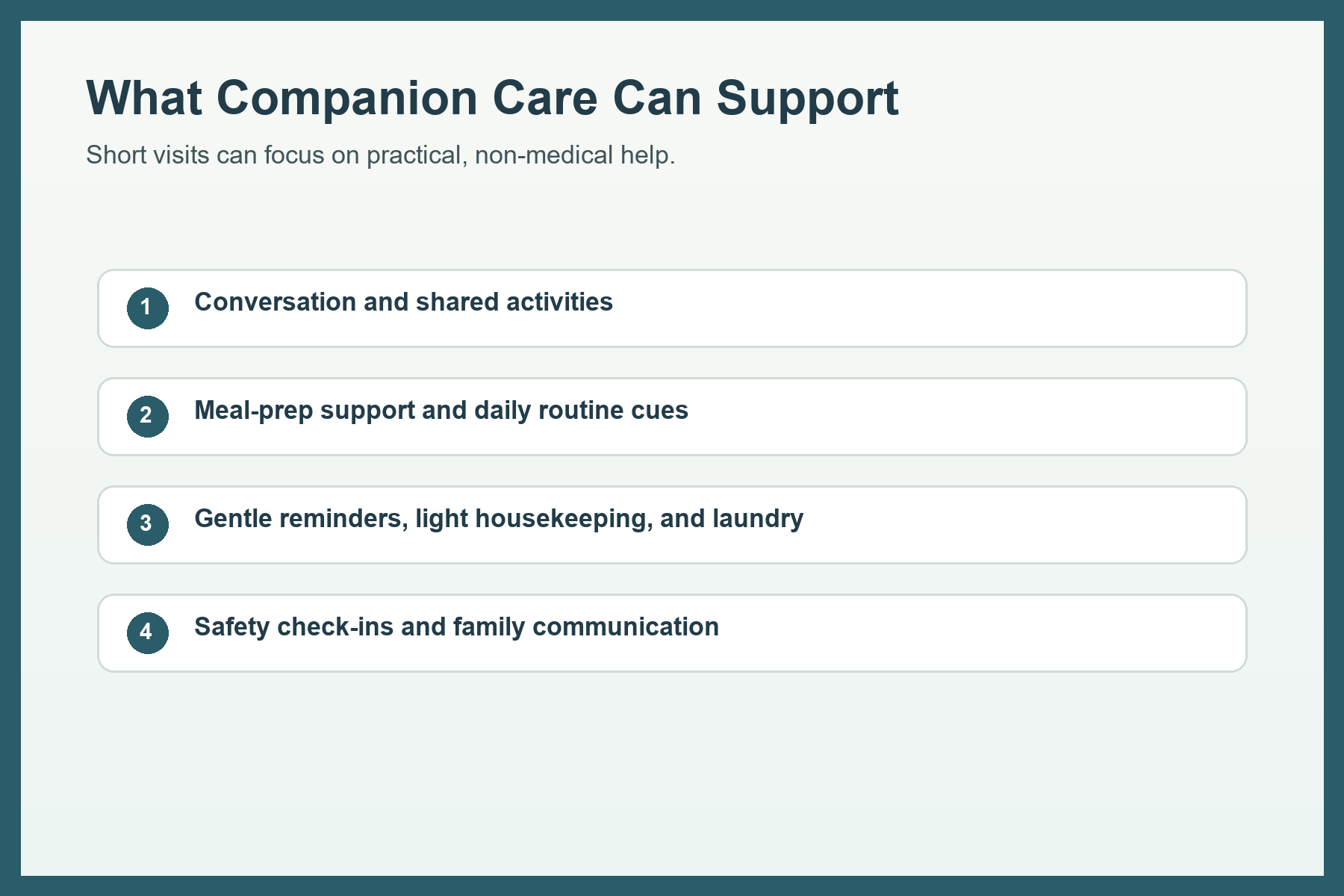
For many San Antonio families, companion care is a practical first step. Promise Senior Solutions offers companion care as part of in-home senior care, with support that can include conversation, shared activities, walks, hobbies, meal-prep support, gentle reminders, light housekeeping, laundry, and safety check-ins.
A short companion-care visit can help an older adult stay more connected, keep familiar routines moving, and give the family a clearer picture of what is happening at home. It is not medical treatment, and it does not replace family involvement. It is steady, non-medical support that can fit into ordinary parts of the day.
What Is Companion Care?
Companion care is in-home support focused on presence, connection, and practical daily help. It may be a caregiver stopping by for conversation and a simple activity. It may be help preparing a light meal, taking a short walk, folding laundry, or giving a gentle reminder about the next part of the day.
The National Institute on Aging encourages older adults and families to pay attention to social connection, and the CDC notes that older adults can be at higher risk for social isolation. Those sources do not mean every quiet afternoon is a crisis. They do remind families that connection and routine matter.
The goal is not to take over. The goal is to add the right kind of support so your loved one can feel respected, included, and less alone at home.
1. A Visit Can Bring Conversation Back Into the Day
One of the first changes families notice is silence. The phone rings less. Favorite activities happen less often. A parent who used to talk about neighbors, church, family, meals, or hobbies may start saying, "I'm fine," even when the day feels smaller than it used to.
A companion-care visit can create a natural reason for conversation. The caregiver might sit with your loved one over coffee, look through a photo album, work on a puzzle, talk about the day's plan, or simply be present in a calm and respectful way.
That kind of visit can be especially helpful when family members cannot stop by as often as they would like. It gives your loved one another trusted person to see, talk with, and expect.
2. A Visit Can Support Simple Daily Routines
Companion care can also help with the rhythm of the day. Many families do not need a complicated plan at first. They need someone to help keep ordinary routines from slipping.
A short visit may help with practical things such as:
Starting lunch or setting out a simple meal
Encouraging a favorite activity or short walk when appropriate
Helping with light household tasks like laundry or tidying
Offering gentle reminders that keep the day clearer
Checking in on whether the home routine seems different than usual
These are small things, but small things are often where family caregivers first notice change. When meals, laundry, hobbies, mail, or appointments start piling up, it may be time to talk through support before the situation feels urgent.
3. A Visit Can Give Family Caregivers Better Information
If you are the adult daughter, spouse, niece, or family member trying to coordinate care, you may feel like you are making decisions from scattered clues. One sibling notices the refrigerator looks full. Another notices the same clothes are being worn. Someone else hears, "Everything is fine," but still feels uneasy.
A companion-care visit can help families see patterns more clearly. A caregiver may notice that your loved one is more engaged in the morning than the afternoon, that certain tasks are becoming harder, or that a small reminder helps the day go more smoothly.
This does not replace your own judgment, and it is not a medical assessment. It is practical, day-to-day insight that can help your family ask better questions: What support is working? What is becoming harder? What would help this week?
4. A Visit Can Make Help Feel Less Overwhelming
Many older adults worry that accepting help means losing independence. Families worry about pushing too hard. A short companion-care visit can feel less intimidating because it starts with normal life: conversation, a shared activity, a meal, a walk, or a familiar routine.
That matters. When support begins in a respectful way, your loved one may have more room to adjust. Instead of making the conversation about what they cannot do, you can frame it around what would make the day easier.
You might say, "Let's have someone come by for a short visit and help with lunch and a little company." That is often easier to hear than a big care decision all at once.
5. A Visit Can Be a Starting Point for a Better Care Plan
A short companion-care visit may be enough for some families. For others, it becomes the first step toward a broader in-home care plan. Maybe companion care is the right fit. Maybe the family also needs respite care, bathing and hygiene support, transportation help, dementia care, or return-to-home support after a transition.
Promise Senior Solutions uses a free, no-obligation consultation to evaluate the home and talk through a care plan. That gives families a calmer way to sort through options without assuming every family needs the same level of care.
When Should You Consider Companion Care?
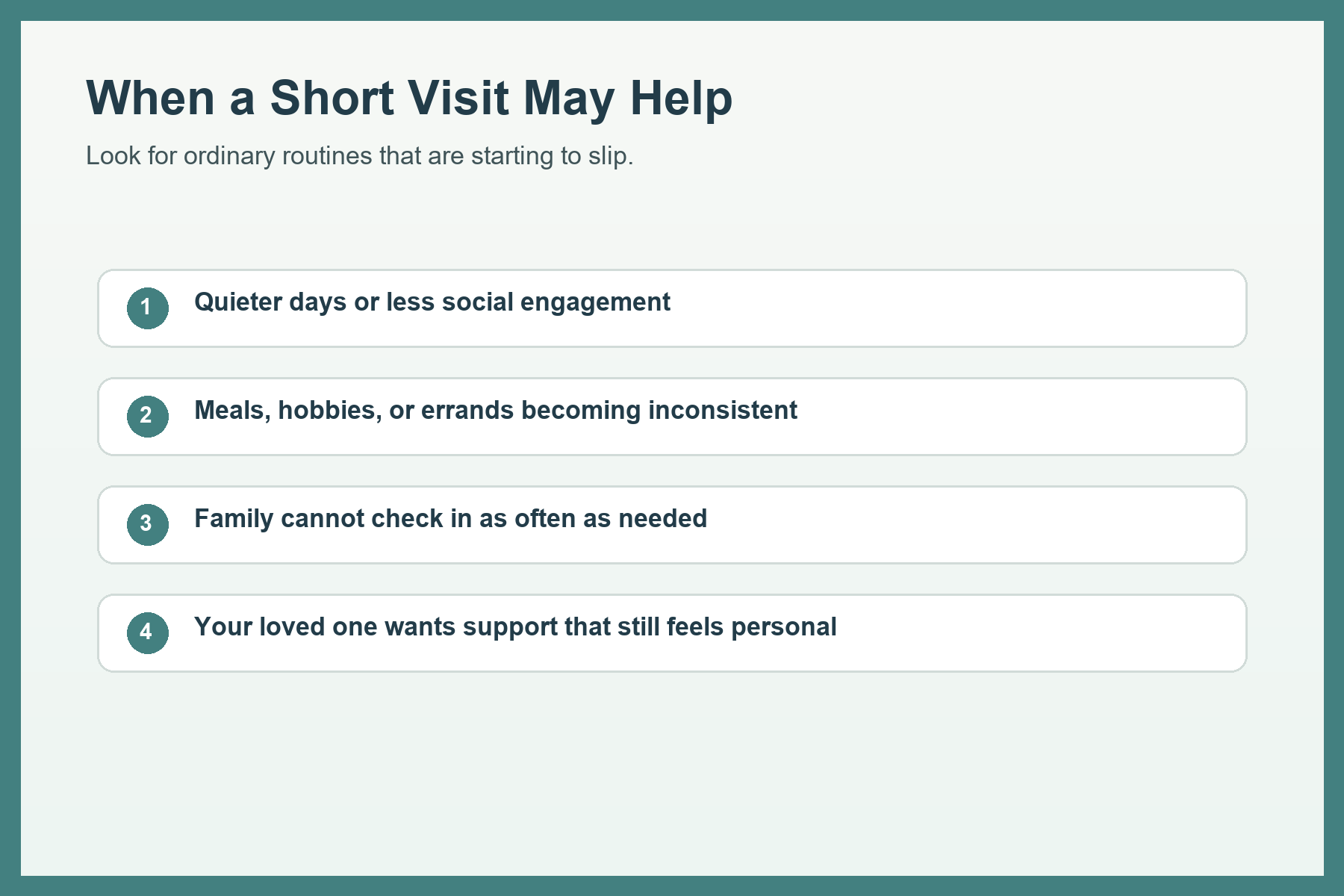
You may want to consider companion care if you are noticing changes like these:
Your loved one is spending more time alone than feels healthy or comfortable
Meals, hobbies, errands, or light household routines are becoming less consistent
You want someone to check in during a part of the day when family cannot be there
Your loved one wants to stay at home but could use more structure and encouragement
You need a gentle first step before considering more regular in-home support
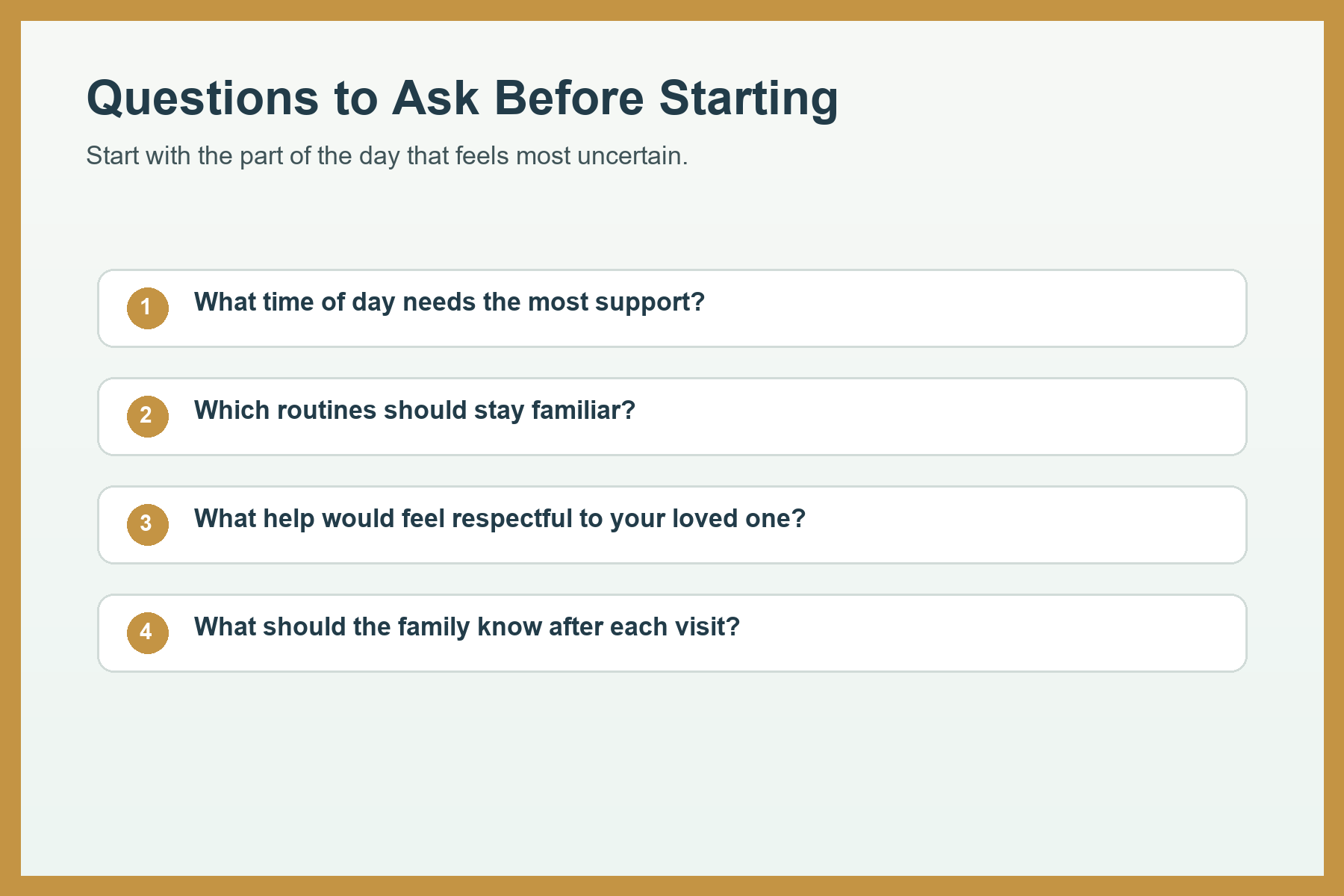
You do not have to wait until everything feels urgent. You can start with the part of the day that feels most uncertain and build from there.
Questions Families Often Ask
Can companion care help if my loved one says they are fine?
Yes, it may still help if the visit is framed respectfully. Many families introduce companion care as help with lunch, conversation, errands, light housekeeping, or a favorite activity rather than as a loss of independence.
Is companion care the same as medical care?
No. Companion care is non-medical support. It can help with conversation, routine, reminders, light household support, and similar daily needs, but it is not a replacement for medical advice or clinical care.
Can a short visit lead to more support later?
It can. A short visit may show that the current level of support is enough, or it may help your family see where a more personalized care plan would be useful.
Getting Started Is Easier Than You Think
If you are unsure what your loved one needs, start with the real-life details. What part of the day feels most difficult? Where are routines slipping? When do you wish someone else could stop by, help, and notice what is going on?
For San Antonio families, Promise Senior Solutions can talk through companion care and other in-home senior care options in a practical, no-pressure way. A short visit may be the step that helps your loved one feel more connected and helps your family feel less alone in the decision.
You do not have to solve everything at once. Start with a conversation, ask what support may fit, and build a care plan around the person you love.